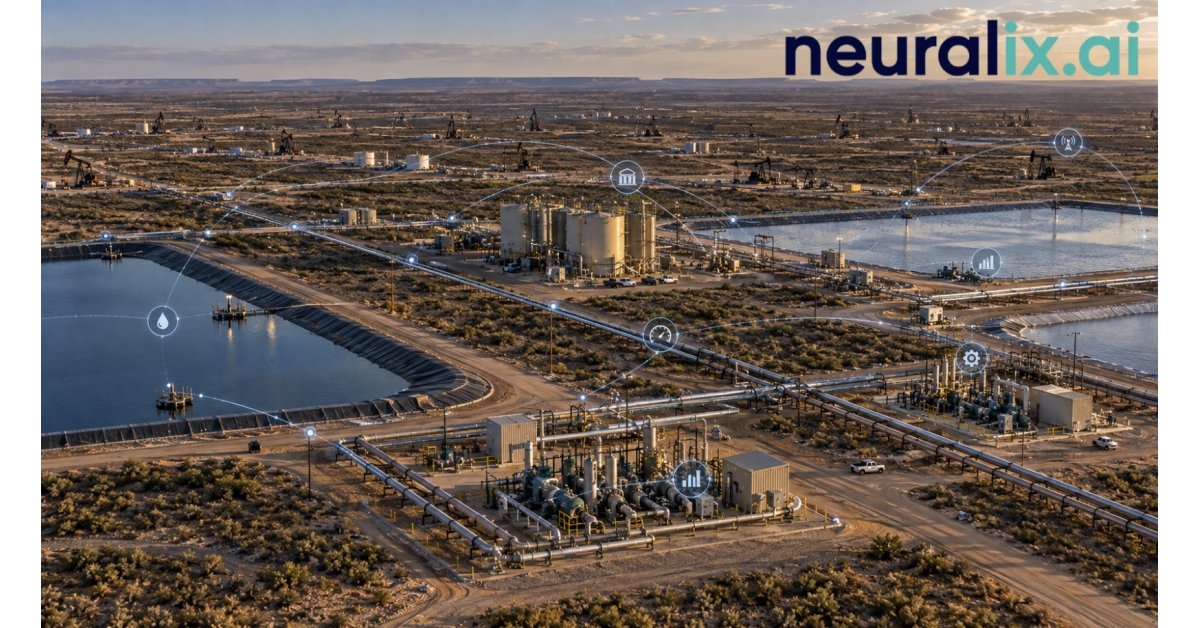
Industrial AI platform focuses on energy consumption, infrastructure efficiency, and cost reduction across produced water collection, recycling, treatment, and disposal networks.
The operational and infrastructure data is already available. The real opportunity lies in leveraging that data more effectively to enhance the economics and performance of the complete water lifecycle.”— Vikram Jayaram, Founder & CEO, NeuralixHOUSTON, TX, UNITED STATES, September 25, 2026 /EINPresswire.com/ — The Permian Basin generates more than just hydrocarbons. In 2025, the region produced an average of roughly 6.6 million barrels of crude daily, accounting for nearly half of all U.S. oil output. Concurrently, operators handle approximately 22 million barrels of produced water each day—about three to four barrels for every barrel of oil. Water production has surged over threefold since 2017 and is projected to rise an additional 39% by 2035, positioning produced water as a major operational and infrastructure hurdle for the region. Managing this volume demands a vast array of pipelines, pumps, storage tanks, recycling systems, and disposal wells. Water must be transported reliably, equipment uptime maintained, energy usage optimized, and dynamic operating conditions managed. At this magnitude, even minor inefficiencies can accumulate into significant operational expenses.
The escalating volume of produced water is also driving a heightened need for technologies that enable operators to comprehend and enhance the performance of the entire water system. Many operators already collect substantial operational data via SCADA systems, historians, sensors, meters, and equipment controls. The key challenge lies in transforming this data into actionable operating decisions. A pump may continue running while gradually losing efficiency. Fluctuations in pressure or flow could signal emerging leaks or other irregularities. Assets performing similar roles may consume varying levels of energy, while shifts in upstream production can create bottlenecks elsewhere in the water network. Across this interconnected infrastructure, individual equipment conditions form part of a larger system-wide optimization puzzle.
Neuralix merges operational data, engineering fundamentals, and machine learning to examine these dynamics. Its applications encompass equipment health monitoring, anomaly and leak detection, water movement forecasting, pump optimization, and energy efficiency. The technology is built to complement existing SCADA, historian, and operational systems rather than replace them. Neuralix has implemented this methodology for produced water operations in the Permian Basin. In one water midstream project, the initial phase delivered a roughly 14% reduction in operating cost per barrel, followed by an approximately 12% enhancement in energy performance during a later phase.
The initiative integrated time-series operational data with equipment and energy metrics to construct models of system performance. Electricity usage, equipment specifications and operating histories, pump curves, failure occurrences, and electricity price variability were all factored in to assess energy performance and pinpoint operational improvement opportunities. On a larger scale, these gains can translate into cost savings and enhanced visibility across water infrastructure. Earlier detection of abnormal conditions allows operating teams to respond before issues escalate, while forecasting offers additional lead time to handle changing water volumes and infrastructure limitations.
The industry’s stance on produced water is also shifting. Recycling for reuse within oil and gas activities has grown, and operators along with technology providers are exploring advanced treatment and beneficial reuse options. Meanwhile, Texas regulators have introduced new mandates for saltwater disposal in portions of the Permian and established frameworks for evaluating beneficial reuse of treated produced water. Treatment introduces a fresh set of operational complexities. Produced water chemistry varies across sources and over time. Treatment plants must manage fluctuating inlet conditions, equipment performance, and energy demands while sustaining required water quality. Consequently, the economics of treatment hinge not only on the technology used but also on the efficiency of the surrounding operations. This necessitates visibility into how water arrives at facilities, how its properties evolve, how equipment performs, and how individual operational choices impact the broader system’s economics.
The produced water lifecycle extends beyond gathering, treatment, and disposal infrastructure. Hydraulic fracturing is one of the largest water consumers in the Permian, and completion design affects subsequent flowback and produced water volumes. Neuralix is also collaborating with pressure pumping service providers to characterize hydraulic fracturing operations using high-frequency frac fleet data. Analyzed data may include treating pressures, pumping rates, proppant and fluid volumes, and pump and engine performance. Models can then characterize stage execution, equipment behavior, and variability across stages and wells. These applications aim to assist pressure pumping teams in identifying equipment stress, assessing operational consistency, and detecting conditions that could lead to non-productive time.
Completion activities also carry downstream implications for water management. The volume of fluid pumped, operating rates and pressures, and formation response can affect the quantity and timing of water returning from a well. Linking completion data with gathering, recycling, treatment, and disposal information can provide water operators with added insight into expected network conditions. This connection grows more critical as recycled produced water is increasingly used as source water for future completions. As a result, managing the Permian water lifecycle now spans the entire chain—from water sourcing and completions through flowback, gathering, recycling, disposal, advanced treatment, and desalination.
Industrial AI deployments in these settings must also respect physical operational constraints. Neuralix’s methodology pairs machine learning with engineering and first-principles models to ensure analytics stay aligned with equipment and process behavior. These systems are designed to integrate with existing operational infrastructure and deliver insights that engineering and operations teams can incorporate into established workflows. Produced water management in the Permian involves producers, water midstream operators, pressure pumping firms, treatment providers, regulators, and technology companies. Ongoing growth in water volumes, recycling, and treatment is amplifying the significance of operational efficiency and coordination across all segments of the water lifecycle.
The Permian has devoted years to building infrastructure capable of handling produced water at substantial scale. The next frontier is increasingly centered on enhancing how that infrastructure is operated, optimizing energy and equipment utilization, and leveraging existing operational data to inform decisions throughout the water lifecycle.
Annorah Lewis
Neuralix Inc.
email us here
Visit us on social media:
LinkedIn