For IT teams juggling a mixed fleet of Dell laptops, a nagging question has always lingered: does the processor inside the machine dictate how much administrative overhead you’ll face? New hands-on testing from Principled Technologies (PT) suggests the answer is a clear no.
Across routine management, lifecycle updates, and out-of-band (OOB) operations, PT found that Dell PCs powered by AMD Ryzen PRO processors and those running Intel processors delivered the same experience from a single management console.
New infographics from Principled Technologies (PT) summarize hands-on testing of routine management, lifecycle updates, and out-of-band management on Dell PCs
ROUND ROCK, TX, UNITED STATES, October 16, 2026 /EINPresswire.com/ — Device refreshes rarely happen all at once. As organizations add new laptops team by team, many IT departments end up managing a mix of AMD and Intel processor-powered Dell PCs. With their new infographics, PT addresses a practical question for those teams: whether the processor inside a Dell PC changes the time and effort that routine management, lifecycle updates, and out-of-band (OOB) management require.
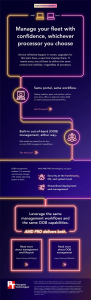
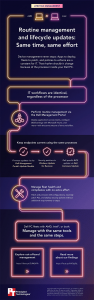
The testing yielded four headline takeaways, each pointing to parity between the two platforms. First, the management workflow itself was identical: IT deployed applications, configured BIOS settings with Microsoft Intune, and performed other routine tasks through the Dell Management Portal with the same time and effort on both the AMD Ryzen PRO-powered and Intel-powered Dell PCs tested. Second, update processes showed no divergence—both sets of systems received firmware updates through the Update Module in the Dell Management Portal, security patches via Windows Update for Business, and Dell-specific BIOS updates through Dell Command Update.
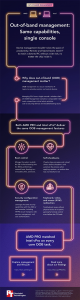
Third, fleet health required no extra steps on either platform. IT could provision OS configurations, routinely patch PCs, and deploy security policies without additional requirements or processes. Fourth, OOB capabilities were matched feature-for-feature: AMD PRO technologies, managed through the AMD Management Console, aligned with Intel vPro on the four core OOB functions PT evaluated—boot control, soft shutdowns, security configuration management, and keyboard, video, and mouse (KVM) redirection.
The out-of-band management infographic breaks down each capability in detail. Boot control gives IT the ability to force-boot a system into the BIOS, initiate a network boot, or boot to a removable drive. Soft shutdowns close processes and unload drivers before power-off, and can run automatically when IT applies updates, reducing the risk of data loss and hardware issues. Security configuration management covers HTTPS secure transport, web services management, and user authentication. KVM redirection grants IT full remote control of a system, even before the OS loads. The infographic sums up the findings with a direct statement: “AMD PRO matched Intel vPro on every core OOB task.”
Beyond the tested capabilities, AMD notes that its PRO technologies also deliver security at the hardware, OS, and system level, paired with streamlined deployment and management.
For organizations that buy Dell PCs in waves, these findings carry real weight. IT can add AMD Ryzen PRO processor-powered systems to an existing fleet without reworking its management tools or processes—the same portal, update tools, and OOB capabilities applied across both platforms in PT’s testing.
To learn more, see the fleet management infographic, the OOB management infographic, and the lifecycle management infographic.
Why it matters: This testing gives IT decision-makers a data-backed reason to treat processor choice as a non-factor in deployment planning. The practical implication is that organizations can standardize on Dell’s management ecosystem regardless of chip preference, potentially simplifying procurement and reducing training overhead.
About Principled Technologies, Inc.
Principled Technologies, Inc. is the leading provider of fact-based marketing and competitive analysis backed by transparent methodologies.
Principled Technologies, Inc. is located in Durham, North Carolina, USA. For more information, please visit www.principledtechnologies.com.
Sharon Horton
Principled Technologies, Inc.
press@principledtechnologies.com
Visit us on social media:
LinkedIn
Facebook
YouTube
X