
The fight against acquired hemophilia A is getting a powerful new ally: a market projection that points to steady growth for the recombinant therapy Obizur through 2030. Behind the numbers lie real-world forces — more diagnosed patients, greater healthcare investment, and a shift toward personalized treatment — that make this market worth watching for investors and clinicians alike.
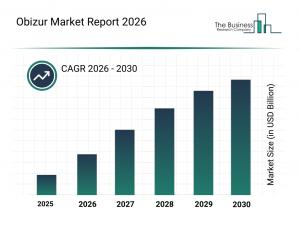
The Business Research Company’s Obizur Global Market Report 2026 – Market Size, Trends, And Forecast 2026-2035
The Obizur market is accelerating as treatment breakthroughs and rising awareness about hemophilia A fuel demand. Ongoing innovation in tailored therapies, combined with an expanding healthcare infrastructure, positions the market for sustained momentum in the years ahead. Here is a closer look at the current market size, the primary growth drivers, which regions are leading the charge, and the emerging trends that will shape Obizur’s future.
Obizur Market Size and Growth Outlook Through 2026
The Obizur market’s historical expansion can be traced to several key developments: advances in recombinant factor VIII research, better diagnostic capabilities for acquired hemophilia A, the establishment of more specialized hematology centers, improved access to hospital-based infusion treatments, and a growing recognition of bleeding risks associated with inhibitors. Looking forward, analysts anticipate growth will be fueled by the wider adoption of personalized hemophilia care, increasing feasibility of home-based infusions, heightened investment in rare-disease therapies, a stronger emphasis on managing inhibitor complications, and continued innovation in recombinant biologic products. Notable trends expected during the forecast period include a greater reliance on recombinant clotting factors, a focus on inhibitor-tolerant hemophilia treatments, the growth of hospital specialty infusion services, rising demand for rapid bleeding control options, and improvements in cold-chain logistics and storage.
Download a free sample of the obizur market report:
https://thebusinessresearchcompany.com/sample_request?id=89454872&type=smp&name=Obizur%20Market%20Report%202026&utm_source=EINPresswire&utm_medium=Paid&utm_campaign=Nov_PR
Understanding Obizur and Its Clinical Role
Obizur is the brand name for susoctocog alfa, a recombinant human coagulation factor VIII medication specifically indicated for treating bleeding episodes in patients with hemophilia A who have developed inhibitors — antibodies that neutralize standard factor VIII therapies. By supplying the missing or defective clotting factor, Obizur helps restore normal blood coagulation in individuals with acquired hemophilia A. This therapy is particularly critical for patients whose immune systems have generated antibodies that render conventional factor VIII treatments ineffective.
The Influence of Rising Hemophilia A Cases on Obizur Market Growth
A primary catalyst for the Obizur market is the growing prevalence of hemophilia A, a genetic bleeding disorder stemming from insufficient or dysfunctional clotting factor VIII. Improvements in medical care and diagnostic technology have extended patient life expectancy and increased the number of confirmed diagnoses worldwide. For context, between April 2022 and March 2023, the National Institutes of Health (NIH) in the UK reported 6,662 males diagnosed with hemophilia A. As more people require treatment to manage bleeding episodes linked to factor VIII deficiency or inhibitors, the demand for Obizur continues to climb.
View the full obizur market report:
https://thebusinessresearchcompany.com/report/obizur-global-market-report?utm_source=EINPresswire&utm_medium=Paid&utm_campaign=Nov_PR
Healthcare Spending Trends Boosting Obizur Market Expansion
Another major factor driving Obizur’s growth is the consistent rise in global healthcare expenditure. Increased spending on medical services, pharmaceuticals, hospital care, and research — largely driven by an aging population, a surge in chronic diseases, and expanding healthcare needs — is improving access to advanced therapies for rare conditions like acquired hemophilia A. This, in turn, boosts demand for drugs such as Obizur. Moreover, additional funding for healthcare research fosters innovation and the development of novel treatments, further broadening the market’s potential. For example, a UK government report from May 2024 noted a 5.6% nominal increase in total healthcare expenditure between 2022 and 2023, a sharp acceleration from the 0.9% growth recorded the previous year.
Regional Leadership in the Obizur Market by 2026
As of 2025, North America commanded the largest share of the Obizur market, buoyed by its well-developed healthcare infrastructure and robust investment in rare-disease therapies. The comprehensive market analysis also covers key regions including Asia-Pacific, Western Europe, Eastern Europe, South America, the Middle East, and Africa, offering a global perspective on market dynamics and regional growth opportunities.
New additions to our 2026 reports:
- Market attractiveness scoring and analysis
- Total addressable market (TAM) analysis
- Company scoring matrix graphics and tables
- Excel-based forecasting dashboards
- Market hotspots infographics
- Key technologies and future trend analysis
- Updated graphics and tables
Speak With Our Expert:
Saumya Sahay
Americas +1 310-496-7795
Asia +44 7882 955267 & +91 8897263534
Europe +44 7882 955267
Email: marketing@tbrc.info
The Business Research Company – www.thebusinessresearchcompany.com
Follow Us On:
• LinkedIn: https://in.linkedin.com/company/the-business-research-company
Oliver Guirdham
The Business Research Company
+44 7882 955267
info@tbrc.info
Visit us on social media:
LinkedIn
Facebook
X
Why it matters: The Obizur market’s trajectory reflects a broader shift toward precision medicine in rare bleeding disorders. As diagnostic rates improve and healthcare budgets expand, therapies that address the specific challenge of inhibitor-positive hemophilia A will become increasingly indispensable, offering both clinical hope and commercial opportunity.