For an industry that lives and dies by precision and safety, aviation is betting big on artificial intelligence — and the numbers are staggering. A new market forecast from The Business Research Company reveals that the global AI in aviation sector is not just growing; it is accelerating at a pace that will reshape how airlines, airports, and regulators operate.
The Business Research Company’s Artificial Intelligence (AI) In Aviation Market Report 2026 – Market Size, Trends, And Global Forecast 2026-2035
The integration of artificial intelligence into aviation is fundamentally changing how the industry functions, boosting both operational efficiency and safety margins. As these technologies mature, their imprint on flight operations, maintenance, and passenger handling is only deepening, setting the stage for what analysts describe as explosive market growth in the years just ahead. Below, we unpack the current valuation, the forces driving expansion, which regions are leading the charge, and the emerging innovations that define this fast-moving sector.
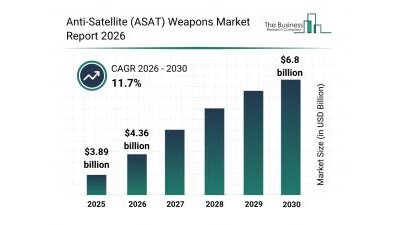
Also worth a look: Anti-satellite weapons market rockets to $4.36B as global conflicts fuel demand and OpenAI’s IP chief says AI should mentor junior lawyers, not replace them.
Projection of Market Growth and Size for AI in Aviation
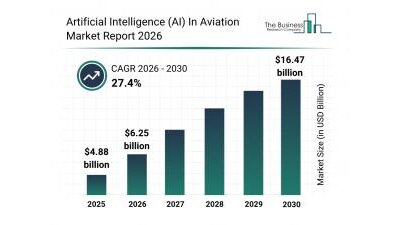
The artificial intelligence in aviation market has already posted impressive recent gains. It is projected to climb from $4.88 billion in 2025 to $6.25 billion in 2026, reflecting a robust compound annual growth rate (CAGR) of 28.1%. This rapid historical expansion is largely attributed to factors such as the soaring volume of aviation data, a heightened emphasis on safety, the pressing need to rein in operational costs, growing complexity in aviation workflows, and broader adoption of automated systems across the industry.
Download a free sample of the artificial intelligence (ai) in aviation market report:
https://www.thebusinessresearchcompany.com/sample_request?id=13007427&type=smp&name=Artificial%20Intelligence%20%28AI%29%20In%20Aviation%20Market%20Report%202026&utm_source=EINPresswire&utm_medium=Paid&utm_campaign=Nov_PR
Looking further ahead, the AI in aviation market is forecast to maintain its steep upward trajectory, hitting $16.47 billion by 2030 with a CAGR of 27.4%. Key drivers behind this projected surge include growing demand for AI-assisted decision-making tools, the push for predictive aviation operations, intelligent optimization of resources, real-time operational insights, and wider implementation of AI across multiple aviation functions. Notable trends expected during this period include increased reliance on AI-driven flight data analytics, predictive decision-support systems, automation of operational workflows, real-time intelligence gathering, and AI-based risk and anomaly detection.
Understanding Artificial Intelligence in Aviation
In practical terms, artificial intelligence in aviation means deploying smart software and data-centric technologies to boost operational performance and aid decision-making across the sector. Through AI, organizations can efficiently analyze massive datasets, automate repetitive tasks, and improve both the precision and speed of critical processes. The technology contributes meaningfully to enhancing safety, operational efficiency, resource management, and cost-effectiveness — all while supporting more dependable and resilient aviation services.
View the full artificial intelligence (ai) in aviation market report:
https://www.thebusinessresearchcompany.com/report/artificial-intelligence-ai-in-aviation-market-report?utm_source=EINPresswire&utm_medium=Paid&utm_campaign=Nov_PR
Growth Catalyst: Rising Air Passenger Traffic
One of the primary engines behind AI’s advance in aviation is the steady climb in air passenger traffic — a term that captures the number of travelers transported by airlines on domestic and international routes. Higher disposable incomes have made flying more accessible for both business and leisure, fueling a surge in passenger volumes. That uptick is pushing airlines and airports to adopt AI solutions for optimizing flight operations, improving the passenger experience, enabling predictive maintenance, and managing growing operational complexity. For example, in August 2026, the International Air Transport Association (IATA) reported a 0.6% increase in domestic passenger demand compared to July 2025, alongside a 0.2% year-on-year rise in capacity — clear evidence of an expanding air travel market and its role in accelerating AI adoption.
Regional Overview of the AI in Aviation Market
In 2025, North America claimed the largest share of the global AI in aviation market. Yet the Asia-Pacific region is expected to post the fastest growth over the forecast period. The market analysis covers a wide geographic sweep, including Asia-Pacific, South East Asia, Western Europe, Eastern Europe, North America, South America, the Middle East, and Africa — offering a comprehensive view of where opportunities are clustering worldwide.
New additions to our 2026 reports:
- • Market attractiveness scoring and analysis
- • Total addressable market (TAM) analysis
- • Company scoring matrix graphics and tables
- • Excel-based forecasting dashboards
- • Market hotspots infographics
- • Key technologies and future trend analysis
- • Updated graphics and tables
Speak With Our Expert:
Saumya Sahay
Americas +1 310-496-7795
Asia +44 7882 955267 & +91 8897263534
Europe +44 7882 955267
Email: marketing@tbrc.info
The Business Research Company – www.thebusinessresearchcompany.com
Follow Us On:
• LinkedIn: https://in.linkedin.com/company/the-business-research-company
Oliver Guirdham
The Business Research Company
+44 7882 955267
info@tbrc.info
Visit us on social media:
LinkedIn
Facebook
X
Why it matters: This forecast signals a fundamental shift in how the aviation industry approaches everything from safety and maintenance to passenger flow and cost control. As AI becomes embedded in flight decks, control towers, and baggage systems, the competitive advantage will increasingly belong to operators who can harness real-time data and predictive analytics — making this trend one that every airline, airport, and aviation regulator should be tracking closely.