The investigation indicates that AXL receptor tyrosine kinase (Axl) serves as a negative regulator of osteoblast differentiation through suppression of Erk1/2 phosphorylation and reduction of Isg15 expression. Inhibiting Axl could potentially reverse these actions, encouraging bone formation and
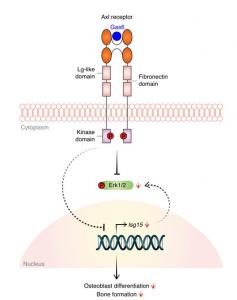
Scientists have discovered that the AXL receptor tyrosine kinase plays a critical role in regulating bone formation, pointing to a new potential therapeutic target for osteoporosis.
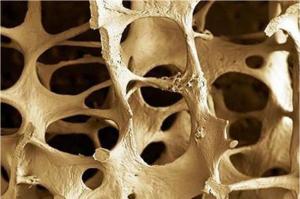
SICHUAN, CHINA, July 28, 2026 /EINPresswire.com/ — Osteoporosis impacts countless individuals globally, leading to diminished bone strength and elevated fracture risk. Now, scientists have pinpointed the AXL receptor tyrosine kinase (Axl) as a crucial molecule that restricts the activity of bone-forming cells. By using a small-molecule inhibitor to block Axl, they managed to boost bone formation and bone density in mice, while also clarifying how the receptor governs bone development. This discovery may pave the way for more affordable treatments for osteoporosis and other skeletal conditions.
Osteoporosis ranks among the most prevalent age-related bone disorders, affecting millions worldwide and raising the likelihood of fractures, disability, and a lower quality of life. Although existing therapies can slow bone deterioration or stimulate new bone growth, many anabolic options depend on biologic drugs that are expensive and require regular injections. Developing more accessible treatments that prompt the body to generate new bone continues to be a significant hurdle.
A fresh study published online on July 6, 2026, in Volume 14 of the journal Bone Research indicates that blocking Axl—a receptor tyrosine kinase involved in cell signaling—might offer a novel method to encourage bone formation. The research was carried out by a team led by Dr. Mubashir Ahmad, who launched the project alongside Prof. Dr. Jan Tuckermann from the Institute of Molecular Endocrinology and Physiology, Ulm University, Germany. After completing his doctorate, Dr. Ahmad continued the work as a postdoctoral researcher under Prof. Dr. Anita Ignatius at the Institute of Orthopedic Research and Biomechanics, Ulm University Hospital, Germany, in close collaboration with the Tuckermann Lab. The investigators discovered that inhibiting Axl boosts the activity of bone-forming cells (osteoblasts) and raises bone mass in mice. These results highlight Axl as a promising target for treating osteoporosis and other bone-related conditions.
"Our findings identify Axl as a promising therapeutic target for osteoporosis and other bone-related disorders," says Dr. Ahmad. "By targeting this receptor, we were able to stimulate bone formation in preclinical models, providing a foundation for developing new anabolic therapies."
To uncover novel regulators of bone formation, the researchers first performed a kinome-wide RNA interference (RNAi) screen—a method that systematically switches off genes to identify their functions. After screening hundreds of protein kinases, they identified Axl as a previously unrecognized regulator of osteoblasts, the cells responsible for building new bone. The team then validated these results by reducing Axl activity through both genetic approaches and a small-molecule inhibitor called BGB324, before evaluating its effects on bone-forming cells in laboratory cultures and in mice.
The outcomes consistently demonstrated that blocking Axl encouraged the maturation of osteoblasts and enhanced their ability to produce mineralized bone tissue. Mice treated with BGB324 developed greater bone mass in their long bones and vertebrae due to increased bone formation. The treatment also raised the number of osteocytes, indicating that Axl inhibition supports normal bone development. Importantly, the therapy was well tolerated in mice, with no signs of significant toxicity during the study period.
To understand how Axl influences bone formation, the researchers examined the underlying molecular pathways. They found that blocking Axl elevated the activity of interferon-stimulating gene 15, a protein that helped activate signals needed for osteoblast maturation. “In simple terms, inhibiting Axl removed a molecular signal that normally restrains bone-forming cells, allowing them to mature and build bone more effectively. This newly identified pathway provides fresh insight into how bone formation is regulated,” says Prof. Dr. Tuckermann.
Interestingly, BGB324 has already been investigated in clinical trials for certain cancers because Axl plays important roles in tumor growth and immune regulation. Although the current findings are based on in vitro and in vivo studies, the availability of an existing Axl inhibitor could help support future research into treatments for osteoporosis.
"Our study provides new insight into the molecular mechanisms that regulate osteoblast differentiation and bone formation," says Prof Dr. Ignatius. "Further studies are needed to determine whether targeting Axl can be translated into a safe and effective treatment for osteoporosis and other bone disorders."
Together, these findings identify Axl as a previously unrecognized regulator of bone formation and suggest that blocking its activity could represent a new strategy for treating osteoporosis. Further clinical research will be needed to determine whether this approach can safely improve bone health in people.
Reference
Title of original paper: Inhibition of AXL receptor tyrosine kinase increases osteoblast function and bone mass
Journal: Bone Research
DOI: https://doi.org/10.1038/s41413-026-00554-0
About Ulm University, Germany
Founded in 1967, Ulm University is the youngest university in Baden-Württemberg and has experienced dynamic and successful growth since its inception. It boasts a remarkable history as a young institution that serves and collaborates with the community, all while being situated on a green campus. As a central part of Science City Ulm, the university serves as a beacon for the region and beyond. Its faculties, including Engineering, Computer Science and Psychology, Mathematics and Economics, Medicine, and Natural Sciences, excel in research and are deeply committed to student care.
Website: https://www.uni-ulm.de/en/
About Dr. Mubashir Ahmad from Ulm University, Germany
Dr. Mubashir Ahmad earned his PhD from Ulm University, Germany, under the supervision of Prof. Dr. Jan Tuckermann. He is currently a postdoctoral researcher in the group of Prof. Dr. Anita Ignatius at the Institute of Orthopedic Research and Biomechanics, Ulm University Hospital. With more than 14 years of research experience, he has authored 19 peer-reviewed publications. His research focuses on the molecular mechanisms regulating bone remodeling, osteoblast differentiation, osteoporosis, mechano transduction, and fracture healing. By integrating molecular biology, functional genomics, genetically modified mouse models, and high-throughput RNA interference (RNAi) screening, his work aims to identify novel therapeutic targets for bone diseases.
About Professor Anita Ignatius from Ulm University Hospital, Germany
Professor Dr. Anita Ignatius is the Director of the Institute of Orthopedic Research and Biomechanics, Ulm University Hospital, Germany. Her research focuses on the regeneration of musculoskeletal tissues, skeletal biomechanics, bone mechanobiology, biomaterials, and tissue engineering, with particular emphasis on bone defect healing and trauma research. She leads a multidisciplinary research team investigating the regeneration of bone, cartilage, ligaments, and intervertebral discs. Professor Ignatius currently heads the Transdisciplinary Centre of Trauma Research at Ulm University and co-directs the Collaborative Research Centre on “Danger Response, Disturbance Factors and Regenerative Potential after Acute Trauma.”
About Professor Jan Tuckermann from Ulm University, Germany
Professor Dr. Jan Tuckermann is a professor at the Institute of Molecular Endocrinology and Physiology, Ulm University, Germany. He earned his PhD in Transcriptional Regulation from the German Cancer Research Center and the University of Karlsruhe (KIT), Germany. His research focuses on nuclear receptors, immune metabolism, bone diseases, osteoimmunology, inflammation resolution, and metabolism. He has served as the Study Dean of Biological Studies at Ulm University and as the President of the German Society for Endocrinology (DGE), contributing to research and education in endocrinology.
Funding information
This work was supported by grants from Deutsche Forschungsgemeinschaft (DFG) to Jan Tuckermann, Anita Ignatius, and Francesco Roselli within the framework of the Collaborative Research Center CRC1149 “Danger Response, Disturbance Factors and Regenerative Potential after Trauma” (Project No. 251293561– CRC1149, INST 40/492-3), and a DFG grant to Jan Tuckermann within the framework of Collaborative Research Center CRC1506 “Aging at interfaces” (Project No. 450627322) and Transregio TRR 369 DIONE “Degeneration of bone due to Inflammation” (Project No. 501752319). Francesco Roselli and Burak Özkan were also supported by the BMBF through the JPND program within the DC4MND consortium (grant no. BMBF 01ED2301). Additional funding was provided by the Federal Ministry of Research, Technology and Space (Bundesministerium für Forschung, Technologie und Raumfahrt, BMFTR) as part of the German Center for Child and Adolescent Health (DZKJ) under the funding code 01GL2407A. Mubashir Ahmad was supported by a Baustein grant (L.SBN.0224) from the Medical Faculty of Ulm University. Open Access funding enabled and organized by Projekt DEAL.
Yini Bao
Editorial Office of West China School of Stomatology
2885546461 ext.
br@scu.edu.cn