
Brainchip logo
Celus Logo

A strategic collaboration is set to provide engineers with direct access to BrainChip’s AKD1500 architecture via CELUS’s AI-powered design tools for device creation

BrainChip Holdings Limited (ASX:BRN)
"By combining CELUS's proven system design expertise with BrainChip's Akida neuromorphic technology, we're giving customers a faster path to design smarter, low-power products.”— Steve BrightfieldLAGUNA HILLS, CA, UNITED STATES, July 22, 2026 /EINPresswire.com/ — BrainChip Holdings Ltd. (ASX: BRN, OTCQX: BRCHF, ADR: BCHPY), the pioneering commercial producer of neuromorphic artificial intelligence technology, and CELUS, the cloud-based electronics design automation leader, today unveiled a major integration partnership that will embed commercial neuromorphic edge AI into mainstream hardware design processes.
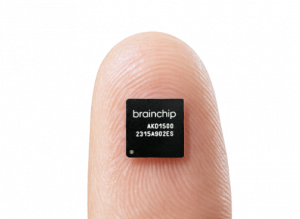
This alliance brings together BrainChip’s groundbreaking neuromorphic silicon with CELUS’s AI-guided design automation, pairing two complementary industry leaders to eliminate the long-standing obstacles to edge-native silicon integration. Through this agreement, BrainChip’s AKD1500 neuromorphic processor and the M.2 module will be offered on the CELUS Design Platform starting in August. Once the integration goes live, engineers can begin building smart devices immediately, sidestepping the complexities that have historically hindered neuromorphic adoption.
An Alliance Designed to Accelerate the Move to Edge AI
The global edge AI market is growing rapidly. Driven by the urgent needs for zero-latency responses, rigorous data privacy, bandwidth conservation, and strict power-efficiency requirements, traditional cloud computing models are shifting processing back to the physical device.
“Putting BrainChip’s AKD1500 on the CELUS Design Platform is about giving engineers around the world a direct path to start building with neuromorphic AI from day one,” said Rob Telson, vice president of global sales at CELUS. “This partnership brings two pioneering technologies together so that neuromorphic intelligence will be just a few clicks away for any design team.”
Merging Strengths to Address Rising Demand for AI-Assisted Design
As electronic systems grow more complex, engineering teams face mounting pressure to shorten development cycles without sacrificing design quality. The CELUS Design Platform enables teams to move from system requirements to a structured hardware architecture, blending AI-assisted guidance with reusable design knowledge to explore implementation options, generate schematics and bills of materials, and continue development in their preferred environment—cutting this phase from months to days.
Through this partnership, CELUS will embed the AKD1500 architecture into its platform, removing the technical learning curve that has historically accompanied neuromorphic chip deployment. Hardware engineers will no longer spend weeks reviewing data sheets; the platform will guide AKD1500 configuration from the very start of the design process.
“"By combining CELUS's proven system design expertise with BrainChip's Akida neuromorphic technology, we're giving customers a faster path to design smarter, low-power products," said Steven Brightfield, chief product officer at BrainChip. "Together with CELUS, we can help teams cut development time and risk while bringing differentiated AI features to market sooner. This partnership is a defining step in making neuromorphic AI mainstream."
Broadening Access for a Worldwide Engineering Community
The collaboration links BrainChip’s neuromorphic architecture with the expanding network of engineers, supply chain partners, and design ecosystems already utilizing the CELUS Design Platform. For both companies, this partnership will heighten the AKD1500’s visibility among a global base of hardware teams exploring edge AI for the first time. In August, when the integration becomes available, engineers everywhere will have a faster, guided pathway to incorporate neuromorphic intelligence into commercial products.
About BrainChip Holdings Ltd.
BrainChip Holdings Ltd. is the global frontrunner in edge AI on-chip processing and learning. The company’s first-to-market, fully digital, event-based AI processor, Akida™, draws on neuromorphic principles to mimic the human brain, analyzing only essential sensor inputs at the point of acquisition and processing data with unmatched efficiency, precision, and energy economy. BrainChip’s Temporal Event-based Neural Networks (TENNs) build on State-Space Models (SSMs), delivering time-aware, event-driven intelligence optimized for scalable, real-time streaming applications. These innovations enable low-power edge AI deployment across sectors such as aerospace, autonomous vehicles, robotics, industrial IoT, consumer devices, and wearables. BrainChip is advancing the future of intelligent computing, bringing AI closer to the sensor and closer to real-time. Explore more at www.brainchip.com.
About CELUS
CELUS is the premier engineering automation industry leader, transforming the electronics design landscape through its AI-assisted cloud platform. By bridging the gap between chip manufacturers, distributors, and hardware developers, the CELUS Design Platform automatically translates high-level system requirements into a structured hardware architecture and reference schematics. Founded by a team of engineers and backed by an advisory board of industry experts, CELUS unites component manufacturers, distributors, EDA suppliers, and engineers across the electronic component industry to enable faster development cycles and new revenue opportunities. Headquartered in Munich, Germany, with additional offices in Porto, Portugal and Austin, Texas, CELUS minimizes engineering bottlenecks to help global teams launch smarter products faster. Learn more at www.celus.io.
Madeline Coe
BoSpar Communications
+1 224-433-9056
email us here