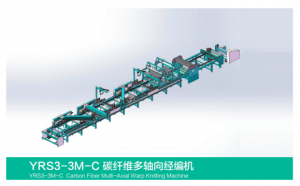
ZHENJIANG, JIANGSU, CHINA, July 22, 2026 /EINPresswire.com/ — A major transformation is underway in the global industrial textile sector, driven by the push for high-performance composite reinforcements. Leading this change is the China High-Speed Carbon Fiber Warp Knitting Machine, an advanced engineering solution tailored to meet the exacting requirements of modern material science. Unlike conventional knitting models originally designed for flexible, organic fibers, these specialized units are built to manage the distinct mechanical traits of carbon filaments. Through high-precision servo-control systems and reinforced needle beds, the machines produce multi-axial fabrics where fibers are arranged in specific orientations—commonly from -45° to +45°—without the crimping or damage that often occurs with older textile equipment. This technical advancement preserves the structural integrity of the carbon fiber, delivering maximum tensile strength for critical industrial uses.
Global Trends in Warp Knitting Technology and Industry Evolution
The textile machinery sector is currently experiencing a period of rapid technological integration, fueled by the growing demand for lightweight, high-strength materials in the “Net Zero” era. Market figures show the global knitting machine industry expanding steadily, with warp knitting technology taking a leading role because of its adaptability and productivity. As sectors like wind energy, aerospace, and automotive engineering shift toward replacing heavy metal parts with carbon fiber reinforced polymers (CFRP), the machinery used to create textile “pre-forms” has become a key area of innovation.
Current industry patterns indicate a clear move away from general-purpose machinery toward highly specialized, application-focused equipment. Traditional knitting models often struggle when processing technical yarns such as carbon or glass fiber. These materials are abrasive, brittle, and susceptible to tension variations. In response, the industry has adopted “High-Speed” and “Multi-Axial” standards. Modern equipment now features electronic let-off (EBA) and electronic take-up (EWA) systems to maintain constant tension, which is vital for ensuring uniformity in technical textiles.
Moreover, the rise of “Industry 4.0” has brought a need for intelligent monitoring. Today’s high-speed machines are no longer purely mechanical tools; they are integrated systems capable of providing real-time data feedback. This helps manufacturers reduce material waste—a crucial factor given the high cost of carbon fiber raw materials. The movement toward wider working widths and higher gauge precision reflects global demand for larger composite structures, such as 100-meter wind turbine blades and aircraft fuselage sections. As the industry matures, the emphasis remains on balancing high rotational speeds with the delicate handling required to prevent the release of conductive carbon dust, which can endanger electronic control systems.
Core Strengths and Technical Superiority in Equipment Design
Danyang Yixun Machinery Co., Ltd. has built a reputation for technical excellence by concentrating on the specific challenges of multiaxial and biaxial warp knitting. With more than 15 years of dedicated research and development, the company has obtained over ten invention patents that target the key pain points of carbon fiber processing. The main advantage of the Yixun technical approach lies in moving from traditional mechanical linkages to advanced electronic synchronization.
One of the most important differences between the China High-Speed Carbon Fiber Warp Knitting Machine and conventional models is the use of specialized needle bar protection. Carbon fiber is naturally conductive; during knitting, tiny fragments can settle on electronic components, causing short circuits. Yixun’s equipment employs a closed-loop protection system and constant temperature control for the needle bed, enabling the machine to run at high speeds without thermal expansion affecting gauge precision.
The mechanical build of these machines is designed for stability. With heavy-duty frames and high-quality alloy components, vibration levels are significantly lower than those in traditional models. This stability allows the equipment to reach operational speeds of 50–1000 r/min while maintaining the precise placement of weft yarns. In a conventional setup, increasing speed often leads to “fiber swimming” or misalignment, which compromises the load-bearing capacity of the final composite part.
Primary Product Applications and Customer Impact
The high-speed multi-axial warp knitting machine proves useful across the most demanding sectors of the modern economy. By enabling automatic multi-layer spreading at angles such as 0°, 90°, +45°, and -45°, the machine produces a textile that is “quasi-isotropic,” meaning it has equal strength in all directions.
Wind Energy Sector: The move toward larger offshore wind turbines demands blades that are both extremely long and very stiff. Yixun’s machinery is used to create the heavy-duty glass and carbon fiber fabrics that form the structural “spar caps” of these blades.
Aerospace and Defense: High-precision biaxial fabrics are essential for aircraft interior flooring, wing skins, and structural ribs. The ability to control tension at high speeds ensures that these fabrics meet the zero-defect standards required by aviation authorities.
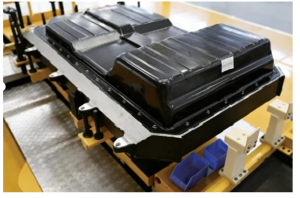
Automotive Lightweighting: As electric vehicles (EVs) aim to extend range, reducing chassis weight is critical. High-speed knitting enables mass production of carbon fiber mats used in B-pillars and roof reinforcements, making carbon fiber a practical option for high-volume automotive manufacturing.
Civil Engineering: Beyond carbon fiber, these machines are adapted for basalt and glass fiber to create geogrids and mesh reinforcements for bridges and highways, providing a rust-proof alternative to steel rebar.
The company’s dedication to quality is reflected in its global presence. By serving markets across Europe, North America, and Southeast Asia, the equipment has demonstrated its reliability in varied climate conditions and production environments. The integration of three sets of independent servo-motor controls ensures that even when switching between different material types—from 3K to 50K carbon tows—the machine adapts seamlessly, offering a level of versatility that conventional models simply cannot match.
Conclusion
In the competitive landscape of industrial manufacturing, the shift from traditional textile models to the China High-Speed Carbon Fiber Warp Knitting Machine represents a critical upgrade for any facility focused on composite materials. The technical evidence consistently shows that integrating electronic control, multi-axial precision, and high-speed stability results in a superior textile product with considerably lower production waste. As the global industry continues to prioritize lightweight and sustainable solutions, the importance of advanced warp knitting technology will only grow in manufacturing success. Through ongoing innovation and a focus on the specific needs of technical fibers, the benchmarks for speed, precision, and durability in textile machinery are being redefined for a new generation of engineering challenges.
For detailed technical specifications and to explore the full range of multi-axial knitting solutions, please visit the official company website: https://www.yixun-machine.com/
DANYANG YIXUN MACHINERY CO.,LTD
DANYANG YIXUN MACHINERY CO.,LTD
email us here