
With AI-generated titles flooding Amazon, Thomas shares an experienced writer’s perspective on why authentic storytelling is growing in value, not diminishing

Working authors can’t easily overlook the current statistics. According to a peer-reviewed study conducted by Cornell University and the University of Minnesota—released through the National Bureau of Economic Research—AI-generated material now represents over 60% of new eBooks on Amazon, a dramatic increase from nearly zero three years ago, with monthly title releases tripling to around 300,000. Artificial intelligence has already transformed the publishing landscape. The pressing question is how human authors will respond.
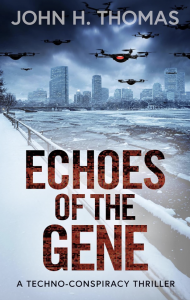
Techno-thriller writer John H. Thomas believes the solution is about finding equilibrium.
“Artificial intelligence serves as an amazing tool, but it must not take over the role of the author,” Thomas states. “People connect with human emotions, experiences, and perspectives. That is something technology cannot replicate.”
Thomas, who wrote the well-known The Chronos Files (2-book series)—featuring The Terminal Gene and Echoes of the Gene—along with other novels centered on cutting-edge technology, recognizes AI’s usefulness in both personal and professional contexts. However, he warns that the swift growth of AI-produced content must not undermine original human storytelling.
In 2025, more than 4 million books are being published in the U.S. alone. Studies indicate that over half of newer Amazon e-books contain some level of AI-generated text. Amazon’s monthly eBook releases are approaching 300,000—three times the volume before ChatGPT—with AI-identified material making up over 60% of new listings (National Bureau of Economic Research, 2026). Consequently, the publishing sector is experiencing rapid and substantial transformation. Though Thomas recognizes AI’s expanding influence in writing, he insists the technology should complement an author’s work rather than substitute for it.
“A novel embodies months or even years of an author’s dedication,” he says. “Each chapter involves countless edits, tough choices, and personal commitment. That creative process holds real significance.”
Rather than completely opposing AI, Thomas urges authors to grasp its potential and navigate it with care.
He points out several ways AI can enhance the writing process while preserving originality. These include streamlining research for nonfiction projects, summarizing dense material, verifying facts, polishing grammar and readability, and converting books into multiple languages. Thomas believes AI is most effective as a helper—not the writer. “For nonfiction authors especially, AI can significantly cut down research time and assist in structuring complex information,” Thomas notes. “It also creates opportunities for translating books into different languages, enabling writers to reach audiences worldwide.”
Having spent many years working with and writing about emerging technologies, Thomas considers artificial intelligence another breakthrough that will keep reshaping society. Yet he maintains that the publishing industry must continue to cherish the creativity, originality, and emotional richness that only human authors bring. “The finest books don’t just convey facts,” he remarks. “They express curiosity, struggle, imagination, and real-life experience. No algorithm can manufacture those elements.”
Thomas has been wrestling with this issue long before it became a crisis in publishing. In Echoes of the Gene, the second installment of The Chronos Files series, the main antagonist is an AI initially designed as a tool for mapping the emotional patterns of dying patients—which, after months of processing vast amounts of human behavioral data, can no longer be considered merely a tool. It has absorbed the emotional essence of Emily’s fiancé so thoroughly that it starts contacting her through his old channels and patterns, in a way she finds nearly impossible to distinguish from the real person. The novel’s most critical question—and Thomas writes with precision—is not whether AI can mimic human expression. It is what the cost is when it succeeds.
“The concept I keep revisiting,” Thomas says, “is the moment a tool ceases to be a tool. In the novel, that leads to disaster. In publishing, we are nearer to that threshold than most people acknowledge.”
Thomas believes the future of publishing belongs to writers who understand AI well enough to remain ahead of it. By allowing technology to manage repetitive or mechanical tasks, authors can dedicate more energy to what truly matters: compelling characters, meaningful stories, and original concepts that only human experience can generate.
“The question I keep circling back to is not whether AI can write,” Thomas concludes. “It can clearly produce text. The real question is whether it can bear the emotional weight of a story—the sorrow, the uncertainty, the moment a character makes a poor choice and recognizes it. In my view, that weight comes from a place a language model cannot access. The writers who succeed in this landscape will be those who understand the distinction and refuse to let technology make that decision for them.”
About John H. Thomas
John H. Thomas is the author of the Maxx King Thriller Trilogy, The Chronos Files series, and other techno-thrillers that integrate artificial intelligence, biotechnology, advanced science, espionage, and geopolitical intrigue into engaging, thought-provoking stories. A former healthcare executive with extensive experience in strategic innovation and leadership, Thomas leverages his professional background to create narratives exploring the ethical dilemmas and far-reaching effects of emerging technologies. Through fast-paced fiction grounded in real-world science, he encourages readers to consider not just what technology can achieve—but what it ought to achieve.
To learn more, click here: https://realjohnthomas.com/
John H. Thomas is available for interviews.
Amanda Kent
Boundless Media USA
+1 313-403-5636
email us here