
As liquid cooling becomes the backbone of high-density AI infrastructure, the humble O-ring is emerging as an overlooked source of contamination that could undermine system reliability. Pacific Rubber & Packing, Inc. (PRP) is now taking that issue directly to the industry’s standards-setting body.
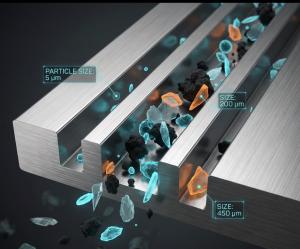
The maker of VeriClean Seals™ brings seal-contamination data to the OCP Community and asks a question: how clean should a wetted seal be in D2C liquid cooling?
PRP, a precision sealing supplier to the semiconductor industry since 1979, announced today it has joined the Open Compute Project Foundation (OCP) as a Bronze member. The company will work within OCP’s Cooling Community to help establish an incoming particulate cleanliness standard for elastomeric seals used in liquid-cooled AI infrastructure.
The issue is not hypothetical. Every direct-to-chip cooling loop relies on hundreds of seals, gaskets, and O-rings. Each is qualified for coolant compatibility, inspected for gross defects, and protected by a filter rating. Yet none of those checks examines what is sitting on the seal’s surface. No published standard currently defines how clean a wetted seal should be before it enters a loop that runs coolant within millimeters of expensive silicon.
PRP has already published data on the problem. Micah Silverman, PRP’s Lead R&D Engineer, has results from studies showing three distinct classes of surface contamination: insoluble particulate such as dirt, dust, and carbon black; oils and release films from manufacturing and handling; and living bioburden. The studies also reveal variability across lots, bags, and manufacturers that is wide enough that choosing a material or screening a supplier does not control it. Within a single bag, the cleanest and dirtiest seal can differ by orders of magnitude.
Perhaps most concerning, a meaningful share of seal-borne particulate falls below typical loop filter ratings, small enough to pass through and contribute to microchannel fouling. PRP calls this mechanism cyclic contamination displacement: because a seal is designed not to fill its gland, every pressurization cycle shifts it and exposes surface area the initial flush never reached. Contamination keeps entering the loop long after commissioning.
“The semiconductor industry learned a long time ago that cleanliness has to be specified, measured and certified, or it isn’t controlled,” said Bill Sharratt, president of Pacific Rubber & Packing. “Liquid cooling hasn’t had that conversation about seals yet, and OCP is where it belongs. We’re joining to contribute what we’ve measured to the Community’s knowledge base for building reliable liquid-cooled infrastructure, so the engineers who design these loops have real data when they decide what ‘clean’ should mean.”
PRP’s VeriClean Seals™ are processed in an ISO Class 7 cleanroom using a patent-pending particulate-reduction process that removes up to 95% of surface particulate contaminants before a seal enters a cooling loop. Each order ships with documented cleanliness verification.
More information, including PRP’s published cleanliness thresholds and the whitepaper “The Hidden Costs of Contamination in Liquid-Cooled Systems,” is available at www.vericlean.one.
About Pacific Rubber & Packing, Inc.
Founded in 1979 and headquartered in San Carlos, California, Pacific Rubber & Packing, Inc. engineers and supplies precision elastomer seals, O-rings, and gaskets for the semiconductor, data center, medical device, biopharma, aerospace, and energy industries. PRP operates ISO Class 7 cleanrooms with in-house precision cleaning and certified cleanliness processing, and its VeriClean Seals™ particulate-reduction line serves applications where surface cleanliness is mission-critical. Learn more at pacificrubber.com or vericlean.one for data center-specific content.
Michelle Murray-Smith
PRP
+1 650-595-5888
Visit us on social media:
LinkedIn
YouTube
Why it matters: Without a defined cleanliness threshold for seals, liquid-cooled systems risk chronic microchannel fouling that degrades performance long after deployment. PRP’s move to bring measured data into OCP’s standards work could give engineers the baseline they need to specify, verify, and control seal contamination—an essential step for the reliability of next-generation AI data centers.