
As multiple sclerosis diagnoses climb worldwide and healthcare systems pour more money into chronic disease management, the market for the injectable therapy Extavia is quietly expanding. A new industry analysis from The Business Research Company lays out the numbers, the drivers, and the regional shifts that will shape this niche but essential pharmaceutical segment through the mid-2030s.
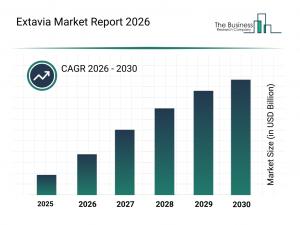
The Business Research Company’s Extavia Global Market Report 2026 – Market Size, Trends, And Forecast 2026-2035
The Extavia market is drawing renewed attention as the global burden of multiple sclerosis (MS) grows. With new treatment options emerging and healthcare strategies evolving, this sector appears set for sustained momentum. Here’s a look at the market’s current size, the forces behind its expansion, key trends, and how different regions are positioned for the future.
Also worth a look: Alexander Hughes argues why human judgment still beats AI in cross-border executive search and Peck Training Group hits 30-year mark with 7,000 leaders trained worldwide.
Steady climb ahead for the Extavia market
In recent years, market growth has been largely driven by early approvals of interferon beta therapies, a rising prevalence of MS, ongoing needs for relapse management, and neurologists’ established comfort with injectable treatments. Long-term clinical evidence supporting these therapies has also kept demand steady. Looking toward 2026, growth is expected to persist, fueled by higher MS diagnosis rates, broader adoption of combination regimens, expansion of specialty neurology services, and stronger patient adherence initiatives. Demand in mature markets remains solid, while emerging trends point to continued reliance on interferon-based treatments, a focus on long-term disease control, relapse prevention strategies, and a persistent preference for injectable disease-modifying therapies.
Download a free sample of the extavia market report:
https://thebusinessresearchcompany.com/sample_request?id=44082811&type=smp&name=Extavia%20Market%20Report%202026&utm_source=EINPresswire&utm_medium=Paid&utm_campaign=Oct_PR
What Extavia does and why it matters
Extavia is a branded version of interferon beta-1b, prescribed primarily for managing multiple sclerosis. Its main job is to cut the frequency of relapses and slow the progression of physical disability in patients with relapsing forms of MS, including relapsing-remitting MS and secondary-progressive MS with active relapses. The drug works by modulating the immune response to reduce inflammatory activity in the central nervous system.
Rising MS prevalence fuels demand
A major driver for the Extavia market is the increasing number of MS cases globally. MS is a chronic autoimmune condition affecting the brain and spinal cord, and its growing incidence is tied to better diagnostic tools, greater disease awareness, and possible shifts in environmental and lifestyle factors. Extavia, administered subcutaneously, helps reduce relapse rates and slow disease progression in relapsing-remitting MS. For context, in January 2023, data from SingleCare Administrators, a US-based discount medical plan organization, reported that nearly 1 million people in the United States have MS, with worldwide cases estimated to exceed 2.8 million. That expanding patient pool is a key force pushing the Extavia market forward.
View the full extavia market report:
https://thebusinessresearchcompany.com/report/extavia-global-market-report?utm_source=EINPresswire&utm_medium=Paid&utm_campaign=Oct_PR
Personalized medicine opens new doors
The growing acceptance of personalized medicine is expected to become a major catalyst for Extavia’s growth. Personalized treatments are tailored to individual patients based on genetic profiles, lifestyle, and specific health conditions, with the goal of improving therapeutic effectiveness while reducing side effects. This approach allows for more precise, targeted care in MS, making treatment plans more effective. Notably, in February 2024, the Personalized Medicine Coalition, a US nonprofit, reported that the FDA approved 16 new personalized therapies for rare diseases in 2023, up from six in 2022. That surge underscores the expanding role of personalized medicine, which is anticipated to boost demand for drugs like Extavia.
Healthcare spending gives the market a lift
Rising financial investments in healthcare are also contributing to Extavia market growth. These investments fund advanced technologies, chronic disease management programs, and improved delivery systems like telemedicine. As spending rises, access to disease-modifying therapies for MS broadens, supporting long-term treatment, monitoring, and supportive care for chronic neurological conditions. For example, a May 2024 report from the UK’s Office for National Statistics showed healthcare expenditure increased by 5.6% in nominal terms from 2022 to 2023, a notable jump compared to the 0.9% growth the previous year. This funding trend helps expand the availability and use of Extavia.
Regional landscape and outlook
In 2025, North America held the largest share of the Extavia market, thanks to advanced healthcare infrastructure and high disease awareness. The Asia-Pacific region, however, is projected to see the fastest growth over the forecast period, driven by improving healthcare access and rising MS diagnosis rates. The report covers Asia-Pacific, Western Europe, Eastern Europe, North America, South America, the Middle East, and Africa, offering a comprehensive view of global market dynamics.
The 2026 market reports now include expanded strategic intelligence, such as market attractiveness scoring and analysis, total addressable market (TAM) analysis, company scoring matrix graphics and tables, Excel-based dashboards, market hotspots infographics, key technology and future trend analysis, plus updated graphics and tables.
Speak With Our Expert:
Saumya Sahay
Americas +1 310-496-7795
Asia +44 7882 955267 & +91 8897263534
Europe +44 7882 955267
Email: marketing@tbrc.info
The Business Research Company – www.thebusinessresearchcompany.com
Follow Us On:
• LinkedIn: https://in.linkedin.com/company/the-business-research-company
Oliver Guirdham
The Business Research Company
+44 7882 955267
info@tbrc.info
Visit us on social media:
LinkedIn
Facebook
X
Why it matters: With MS affecting more than 2.8 million people globally and healthcare spending on the rise, the Extavia market’s steady growth reflects a broader shift toward sustained chronic disease management. As personalized medicine gains traction and Asia-Pacific emerges as a fast-growing region, stakeholders in neurology and pharmaceutical supply chains will need to adapt to changing demand patterns.