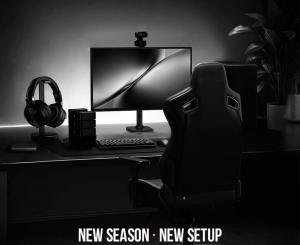
Kaiser 4 with Monitor Arm and Desk
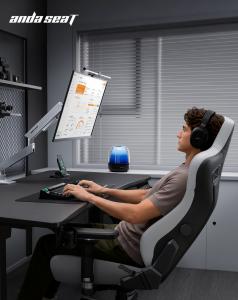
Kaiser 4 with Monitor Arm and Xtreme
AndaSeat Unveils Unified Study Hub as Student Tech Collections Become Increasingly Multi-Device
SPOKANE, WA, UNITED STATES, August 22, 2026 /EINPresswire.com/ — The Kaiser 4 line, Xtreme standing desk, and Axis monitor arm are introduced as three autonomously configurable tiers covering ergonomic seating, surface height, and screen orientation
AndaSeat is promoting a three-part desk arrangement for the 2026 autumn term, linking the enhanced Kaiser 4 Series chair, Xtreme Series standing desk, and Axis Single Monitor Arm to a common issue among students: acquiring additional gadgets does not inherently result in a more organized workspace.
Devices continue to dominate this season’s shopping lists for both high school and college students. On August 4, the National Retail Federation noted that electronics and related accessories represent approximately one-quarter of all college-related spending. Technology has transitioned from being a luxury to a fundamental necessity, with a notable rise this year in the percentage of college shoppers buying such items.
The tech landscape in higher education is also growing more intricate. According to EDUCAUSE’s 2026 Students and Technology Report, learners are dealing with shifting tech demands, AI integration, cybersecurity worries, and new expectations around academics and career readiness. A follow-up webinar from the organization indicated that students are seeking greater consistency in tools and fewer obstacles when completing tasks.
These studies focus on digital devices rather than physical furniture and do not assess AndaSeat’s offerings. Even so, they highlight a tangible issue that grows more apparent with more gear: computers, displays, and accessories are typically bought separately, yet the chair, desk, and screen arrangement must function together as a single unit.
AndaSeat is targeting that very integration gap with the Kaiser 4, Xtreme, and Axis trio.
The Gap Between Products Often Creates the Weakest Link
Workstations are frequently assessed piece by piece.
A chair might offer adjustability. A desk might alter its height. A monitor could come with its own stand. Each item can fulfill its own purpose independently.
The trouble typically surfaces where these elements meet.
Raising a seat might enhance typing posture but can skew the monitor’s viewing angle. Elevating a standing desk moves both the keyboard and screen together, even if they each need different heights. A bulky monitor base eats up desk space that could hold textbooks, a laptop, or notebooks. Cables for screens, chargers, and other peripherals can restrict motion both above and below an adjustable desk.
OSHA’s computer-workstation recommendations treat these components as interconnected. It advises adjusting the chair in tandem with the screen, keyboard, and desk, and notes that monitor placement should be weighed alongside other workstation elements.
The same guidelines point out that cramped surfaces can force devices into awkward positions, and that clutter under the desk can limit legroom and chair mobility.
This lays the groundwork for AndaSeat’s three-tier strategy: Xtreme provides the surface, Axis decouples screen positioning from that surface, and Kaiser 4 handles the user’s physical interaction with the setup.
Xtreme Serves as the Foundation Layer
The Xtreme Series acts as the structural anchor of the arrangement.
Its motorized lift mechanism spans 28.7 to 46.1 inches (730 to 1,170 mm), moving at 22 mm per second. Through the digital control pad, three memory presets save frequently used heights. The desk can bear up to 70 kg and features a cold-formed steel frame.
In this three-product setup, the key benefit is that the entire working height can shift without dismantling anything.
Keyboard, mouse, notebook, and other essentials stay put on the surface while the desk transitions between saved levels.
Xtreme also handles the wiring beneath the desk. A steel cable tray accommodates power strips and extra cord slack, while internal channels minimize visible wires.
That becomes crucial when multiple student devices share one space. A monitor, laptop charger, phone cord, desk lamp, and other tech can produce more cabling than the surface suggests.
Thus, the desk functions as both the horizontal platform and the lower wiring hub of the system.
Axis Breaks the Link Between Screen and Desk Height
The Axis Single Monitor Arm solves a problem that persists even with an adjustable desk.
When a monitor relies on its stock base, it rises and falls in lockstep with the desk. The gap between screen height and keyboard height stays constant.
Axis separates those two factors.
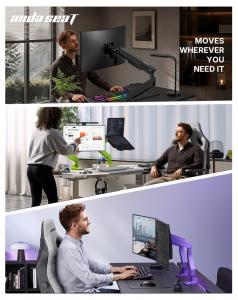
It fits 17- to 34-inch displays weighing 3 to 11 kg, offering -25 to +90 degrees of tilt, 90 degrees of side-to-side swivel, 360-degree rotation, and about 10.8 inches of vertical travel.
A mechanical spring governs vertical motion, while a one-way torque hinge is engineered to prevent the display from drooping once set.
This enables fine adjustments to the monitor after the Xtreme desk has reached its target height.
OSHA recommends evaluating viewing distance, angle, and height together, and suggests that monitor supports allow users to alter distance, tilt, and rotation. It also calls for sufficient desk depth to maintain proper screen distance.
Axis also removes the original monitor stand from the usable desktop, freeing space for papers, a laptop, keyboard, or other study materials.
Magnetic cable covers along both arm segments tidy the final wiring route between desk and display while still permitting screen motion.
Kaiser 4 Handles the User-Support Layer
The final element is the upgraded Kaiser 4 Series.
With the desk and monitor set, the chair manages how the user connects to those two layers.
Kaiser 4’s 6D armrests offer 7 cm of height adjustment, 4 cm of fore-and-aft movement, broad rotational flexibility, and a wider lateral range. These options let forearm support adapt to keyboard placement, mouse use, and desk height.
Its revised lumbar system employs an elastic locking gas spring for a 24-degree pop-out range with lockable positioning at any angle. A separate four-way mechanism delivers 76 mm of vertical and 30 mm of depth adjustment.
These controls operate independently.
The desk can set the keyboard level without dictating lumbar support. The monitor arm can fix screen height without forcing a seat-level change. The chair can modify arm or back support without shifting the display.
OSHA likewise advises arranging chairs, screens, desks, and input tools together rather than fine-tuning each in isolation.
Thus, Kaiser 4 rounds out the workstation by managing the human side of the equation, rather than duplicating functions already performed by the desk or arm.
Cable Management Becomes an Integrated Approach
This three-part configuration also establishes a unified cable-handling strategy.
Xtreme contains power strips and surplus cord below the surface. Axis routes monitor cables above it. As a result, the desk’s vertical motion and the arm’s screen movement occur in distinct yet linked cable management zones.
That separation is critical because an adjustable workstation moves in multiple directions.
The desk shifts up and down. The monitor arm extends, retracts, swivels, and raises. Cables must have enough play for both systems without leaving loose loops across the work surface or hindering motion underneath.
OSHA notes that components and accessories should be placed to avoid unnecessary blockages or forced awkward positioning.
The Xtreme and Axis cable systems don’t replace the need for proper cord lengths and safe power handling. They offer clear pathways for wiring that would otherwise be dealt with piecemeal.
Modern Study Setups Are Evolving Into Integrated Systems
NRF’s 2026 figures indicate that electronics remain among the biggest expenses families face when gearing up for the school year.
As that tech category grows, the workstation question shifts.
The focus is no longer solely on which laptop, display, or peripheral a student owns. It’s whether those devices can fit into a physical framework where screen, input tools, and body support remain independently adjustable.
AndaSeat’s Kaiser 4, Xtreme, and Axis setup is built around that division of duties.
Xtreme sets the surface. Axis sets the screen. Kaiser 4 sets seated posture and support.
Each product stays independently adjustable, but their roles are complementary rather than redundant. For setups heavy on study, creativity, and gaming, AndaSeat is making coordination the key takeaway: a workstation’s worth comes not just from each component’s specs, but from how well they work in concert.
About AndaSeat
Established in 2007, AndaSeat creates ergonomic furniture and workspace solutions for gaming, professional, academic, and residential settings. Its lineup features ergonomic chairs, standing desks, monitor arms, and additional workstation accessories.
Caroline Chen
AndaSeat
email us here
Visit us on social media:
LinkedIn
Instagram
Facebook
YouTube
TikTok
X