GoEnhance AI Unveils Visual Localization 2
GoEnhance AI Unveils Visual Localization 3
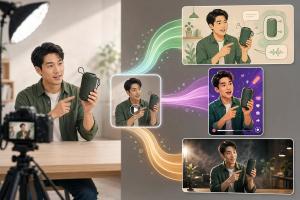
Discover how visual localization empowers brands to repurpose current video assets across diverse markets, audiences, platforms, and creative objectives using artificial intelligence.

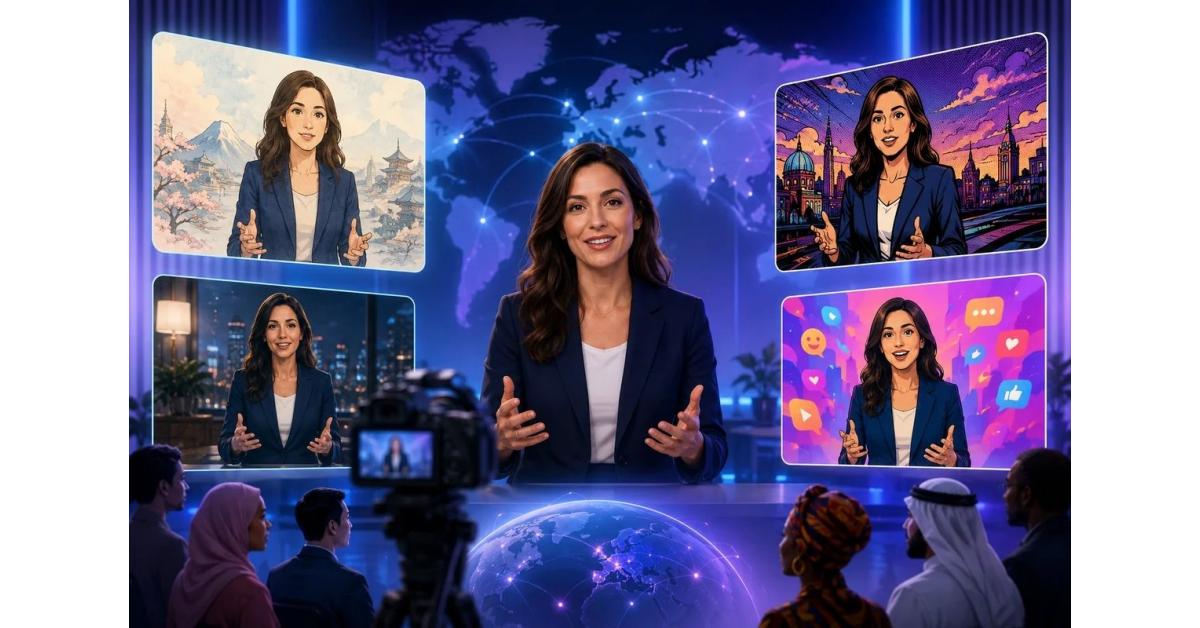
SHERIDAN, WY, UNITED STATES, August 23, 2026 /EINPresswire.com/ — GoEnhance AI is establishing AI-powered video adaptation as a fresh dimension of localization known as visual localization. This methodology enables content creators to preserve the motion, energy, and framework of an existing video while altering its visual style to suit various audiences, campaign objectives, and content settings.
GoEnhance AI serves as a web-based platform dedicated to generating, modifying, and refining images and videos through AI technology. Its suite of tools allows creators to craft new visual content derived from pre-existing footage, still images, or text-based prompts.
Visual localization expands the utility of a recorded clip beyond its initial form. A product showcase filmed in a basic studio setting can be transformed into a stylized educational explainer, a vibrant animated piece for social channels, or a polished cinematic version for a product unveiling. The core message and motion stay intact while the visual presentation shifts.
For companies operating across multiple territories, this provides a substitute for reshooting the identical scenario repeatedly. Independent creators can equally adapt their current footage into a style that resonates with a particular community or platform.
1. Video Localization Extends Far Beyond Text Translation
Localization specialists have traditionally adjusted language, date formats, units of measurement, cultural nuances, and action prompts. Yet visual preferences also differ considerably.
An animation approach that fits a campaign aimed at younger demographics could seem overly casual for a corporate training module. A highly refined commercial look might suit a product introduction but come across as too stiff for a casual social media feed. A complex cinematic sequence could lose its impact when viewed on a compact mobile display.
Consequently, a video that has been linguistically translated may still appear crafted for a different demographic. Visual localization bridges this gap by adjusting illustration style, texture, realism, color saturation, background intricacy, pacing, and subject emphasis.
The objective is not to rely on cultural clichés, but to acknowledge that viewers consume content within varying contexts. The visual approach should align with whether the material functions as an advertisement, instructional content, entertainment, or professional communication.
A unified visual identity can link all variations. Brands can preserve recognizable hues, items, figures, or layouts while tailoring the treatment to each specific audience.
2. A Single Performance Can Be Reimagined for Multiple Viewerships
Footage that has been recorded contains nuances that are challenging to replicate purely through text commands. It captures gestures, timing, facial cues, product handling, camera dynamics, and the spatial connection between elements.
These components frequently represent the core value of a production. A presenter might deliver a lucid explanation, a performer might execute a precise routine, a product might be showcased from an ideal perspective, or an instructor might illustrate a straightforward procedure. Filming again solely to alter the aesthetic presentation can incur expenses without enhancing the message.
AI-driven transformation enables the original performance to serve as the foundational guide.
A brand can start with a single approved recording and experiment with multiple visual interpretations. The realistic source version might remain suitable for a corporate website, while a simplified animated rendition is deployed for social media. An illustrated style could bolster educational materials, and a more dramatic cinematic treatment might be chosen for a campaign preview.
The footage evolves into a versatile performance asset. Numerous organizations already possess underutilized product demos, interviews, and performances whose original styling no longer aligns with a fresh initiative. Visual transformation adjusts the presentation while retaining the valuable substance.
3. Animation Can Render the Identical Message More Approachable
Animation modifies the perceived distance between the viewer and the subject matter. A realistic video might come across as direct and authoritative, whereas an illustrated version can seem more friendly, creative, or relaxed.
This proves advantageous when a creator must convey the same concept to audiences holding different expectations.
An educational institution might feature a live-action demonstration aimed at adult learners and employ a simplified animated version to captivate younger audiences without altering the fundamental steps. A financial firm, software company, or musician can similarly customize selected scenes for social platforms or a particular release.
Leveraging an AI video to animation converter, creators can transform live-action clips into animation while still relying on the motion and arrangement of the original footage as a point of reference.
Animation goes beyond being a mere decorative effect. It can minimize visual clutter, highlight facial expressions, enhance the visibility of movement, or situate a familiar action within a more fantastical setting.
The chosen animation style should align with the communication objective. Soft illustration might suit family-oriented, wellness, or instructional content, whereas bolder lines and higher contrast could fit gaming, music, sports, or entertainment sectors.
Creators ought to account for the ultimate viewing size. Details that are visible on a desktop monitor may vanish in a vertical mobile clip, where clear silhouettes and distinct expressions take precedence over intricate backgrounds.
4. Visual Localization Can Minimize Redundant Production Efforts
Conventional localization frequently demands multiple renditions of a single campaign. When visual treatment becomes part of the equation, the workload can escalate further.
A company might arrange separate filming sessions for each target audience, reconstruct scenes using animation, or task an editing crew with manually crafting several distinct looks. These methods remain valid for high-budget projects, but they prove impractical for the pace of regular digital content publishing.
AI transformation introduces an alternative path.
Rather than initiating every version from a blank editing timeline, teams can start with approved source material. The performance, product placement, and camera angles are already set. The creative challenge shifts to reinterpretation instead of full-scale reconstruction.
This proves especially valuable during the concept development phase. Before committing to a complete animated campaign, a team can convert a brief segment of footage to assess how the direction performs in motion.
The same workflow can aid internal evaluations. Designers, marketing professionals, regional teams, and clients can assess visual approaches using actual performance footage rather than depending solely on static concept boards.
Not every test requires becoming a final published piece. A style that detracts from the product or undermines the message can be discarded before significant production resources are invested.
5. Video-to-Video Generation Bridges Filming and AI Production
Video-to-video generation occupies a functional middle ground between traditional filming and fully synthetic video creation.
The creator retains control over the original performance. A person can deliver the intended expression, interact with a product correctly, or execute a specific action. The camera can be positioned deliberately, and the scene’s timing can be aligned with the intended message.
AI is subsequently employed to reinterpret the visual presentation.
A video to video generator enables users to begin with an existing clip and investigate a different aesthetic while using the original motion and structure as a guiding framework.
This approach renders visual localization more feasible because regional or platform-focused teams can concentrate on the desired feel of the footage rather than detailing every action from scratch.
One market might respond favorably to a clean illustrated appearance. Another campaign might necessitate a more dramatic or expressive style. A social media version could employ stronger visual contrast, whereas a training iteration remains straightforward and legible.
The foundational clip ensures continuity across all these variations.
This consistency holds significance for brands seeking localization without sacrificing brand recognition. The identical spokesperson, product demonstration, character motion, or scene layout can appear across multiple treatments.
Teams can preserve consistent timing when an approved voiceover or subtitle track is already finalized. The process functions optimally with a single central subject, one clear action, and consistent illumination.
6. Varying Platforms Demand Distinct Visual Approaches
Visual localization extends beyond geographical boundaries. Content also requires adaptation for the specific environment where it will be viewed.
A video intended for a corporate website might employ measured pacing, subtle motion, and rich detail. That same treatment may struggle to capture attention within a fast-scrolling social feed.
Short-form platforms often prioritize immediate visual impact. The primary subject needs to be instantly identifiable, even when viewed without audio. Strong outlines, legible facial expressions, and a distinct opening action often outweigh complex scene design.
Educational platforms impose different criteria. Viewers may need to follow a process closely, requiring objects and gestures to remain steady. A dramatic style overhaul might appear striking but could diminish instructional effectiveness if key details become altered.
Advertising introduces yet another set of priorities. The product, its benefit, and the call to action must remain prominent while the visual treatment captures interest.
Visual localization permits the same source material to be tailored according to these varying conditions.
A lengthy tutorial might stay realistic, while a promotional excerpt becomes animated. A corporate interview could remain conventional on a website and transform into a graphic social media preview.
This approach treats platform format as an integral part of localization rather than a final resizing step. Aspect ratio, cropping, pacing, detail level, and visual intensity should all be considered prior to transformation.
7. Style Transfer Can Adjust Mood While Preserving the Core Message
Two videos can convey identical information while eliciting markedly different emotional reactions.
A realistic scene may feel immediate and grounded. A watercolor aesthetic might feel contemplative. A comic-inspired look could inject energy. A handcrafted or miniature appearance may render the content playful and memorable.
These distinctions can be leveraged strategically.
Through video style transfer, users can apply fresh artistic treatments to existing clips while maintaining the central subject and motion of the source material.
For visual localization purposes, this implies the message does not require rewriting each time the intended tone shifts.
A tourism campaign could showcase the same walking sequence as a realistic destination video, an illustrated travel narrative, or a cinematic concept piece. A wellness brand could transform a single demonstration into a calm educational version and a more dynamic social campaign.
Style transfer can also rejuvenate older footage that remains factually relevant but appears outdated, eliminating the need for original participants to re-record.
The chosen style should remain suitable for the subject matter. Highly abstract treatments may suit music or entertainment but could interfere with a technical demonstration. Heavy textures might add visual appeal while making small products difficult to identify.
The aim of localization is not to render every version visually extreme. Rather, it is to make the treatment more fitting for the intended viewer and situation.
8. A Visual Localization Brief Should Specify Immutable Elements
Creative flexibility proves most valuable when the essential constraints are clearly defined.
Prior to transforming a clip, teams should pinpoint the components that must remain identifiable. These could include the shape of a product, the motion of a performer, the facial expression of a speaker, the order of a demonstration, or the placement of a brand element.
The brief can then outline what is permitted to change.
This may encompass the artistic medium, environmental styling, degree of realism, lighting atmosphere, color saturation, background detail, or overall ambiance.
Establishing these parameters assists reviewers in determining whether a version maintains the required information and supports the intended audience.
A practical visual localization brief might include the target market or platform, audience age range, communication objective, desired tone, final aspect ratio, and protected visual components.
It may also flag potential risks. Facial features, hands, text, logos, and product specifics often demand additional scrutiny because minor inconsistencies can become apparent during playback.
Organizations can document approved styles, permissible transformations, and guidelines for source footage to render experimentation more consistent and repeatable.
9. Human Oversight Remains Crucial for Localized Video Content
AI-assisted transformation can accelerate creative workflows, but it does not eliminate the necessity for careful review.
A transformed video should be reviewed as a complete sequence. A single frame might appear flawless, yet subsequent frames could introduce alterations to facial features, clothing, products, or background elements.
Playback at normal speed enables reviewers to evaluate the overall experience, while slow-motion review can uncover inconsistencies.
Commercial teams should pay heightened attention to brand-sensitive details. Product shapes, packaging, trademarks, and on-screen text must remain precise when the video is utilized for advertising or e-commerce purposes.
Regional reviewers can also assess whether the visual treatment is culturally suitable for the target audience. A style that seems engaging to the central production team might generate an unintended impression in another market.
Rights and consent considerations remain integral to the workflow. Users must possess authorization to upload, modify, and distribute the source footage. Transforming a video does not negate the rights of performers, creators, or owners of protected material.
Clear labeling may be warranted when a transformed video could be mistaken for unedited documentary footage.
Visual localization should enhance communication, not obscure the origin or intent of the material.
10. Existing Footage Can Become a Valuable Long-Term Localization Resource
Organizations frequently accumulate years of footage from product launches, training sessions, events, interviews, and campaigns. Much of this content becomes inactive following its initial purpose.
Visual localization provides a compelling reason to revisit these archives.
A clear product demonstration might remain useful even if its background or editing style appears dated. An interview may hold a valuable explanation that could be adapted into an illustrated social media clip. A performance captured for one campaign could inspire a new creative direction.
This shifts how teams perceive the return on investment for a video production.
The source recording does not have to serve a single campaign exclusively. When motion and composition are captured effectively, the footage may support future adaptations for various platforms, markets, seasonal promotions, and audience segments.
New productions can support this flexibility by recording clean clips with distinct subject separation, consistent lighting, and sufficient framing space to accommodate multiple aspect ratios.
The outcome is a modular production framework: filming captures the performance, localization adjusts language and messaging, visual transformation modifies appearance, and editing prepares the platform-specific final version.
11. Visual Localization Adds a New Dimension to Global Content Strategy
The expansion of international and multi-platform publishing has transformed localization into an ongoing process rather than a final step.
A video may need to communicate across languages, cultures, audience segments, and digital channels. Translating the spoken words remains vital, but the visual presentation equally influences whether the content feels relevant.
GoEnhance AI’s video transformation tools offer creators and businesses a means to explore this additional layer.
By starting with existing footage, users can preserve approved performances and recognizable motion while experimenting with different visual directions. Animation, video-to-video generation, and style transfer can each address a distinct localization objective.
The intent is not to produce an excessive number of versions, but to craft the appropriate version for each specific audience.
An effective localized video should maintain a connection to the original brand or creator. It should preserve the essential information, adjust the presentation where suitable, and honor the context in which viewers will encounter it.
Visual localization may emerge as a standard consideration alongside subtitles, voiceovers, aspect ratios, and regional messaging.
12. About GoEnhance AI
GoEnhance AI is a web-based AI platform specializing in video and image generation, transformation, and enhancement. The platform assists creators, marketers, educators, agencies, and production teams in developing visual content from text, images, and existing footage.
Its video capabilities include animation conversion, video-to-video transformation, artistic style transfer, and various other creative workflows tailored for marketing, education, entertainment, social media, and digital storytelling.
Irwin
MewX LLC
+1 307-533-7137
email us here
Visit us on social media:
LinkedIn
YouTube
X