Using electrical signal measurements from neuronal networks to identify prolonged disorders of consciousness
BEIJING, FENGTAI, CHINA, August 14, 2026 /EINPresswire.com/ — Precisely identifying pDOC in patients with severe brain injuries remains difficult, and misdiagnosis restricts treatment effectiveness. Current data show a 40% rate of incorrect diagnosis even when sophisticated detection tools are employed. This largely stems from patient-related factors—fatigue, sedation, or unresponsiveness. Currently, physicians rely on various brain imaging methods as the definitive approach for determining consciousness in patients.
Investigators from Hebei Medical University examined multiple scientific research databases to summarize the existing evidence on pDOC management strategies. Their primary emphasis was on studies that directly assessed the brain’s electrical activity in pDOC patients, referred to as “local field potential.” The research, headed by Dr. Conghui Li and Dr. Yi Yang, appeared in Volume 12, article number 22, on July 13, 2026, in the Chinese Neurosurgical Journal. Dr. Conghui Li commented, “We aim to analyze how the brain electrical signal recordings support the pDOC diagnosis and study the possible outcomes and limitations of this technique.”
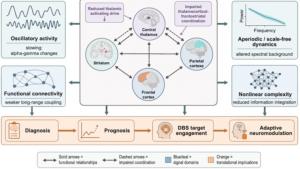
This review analysis puts forward a brain communication network model to clarify how brain injury leads to extended unconsciousness. According to this model, injury to the brain damages or eliminates numerous nerve cells, interrupting the transmission of electrical signals to deep brain structures such as the thalamus. Consequently, communication among key brain regions weakens, diminishing overall brain function. Supporting this framework, four major measures of brain electrical signaling activity are identified that assist researchers in gauging the level of consciousness.
A healthy conscious brain sustains a constant, organized, and balanced flow of activating slow signals and calming fast signals, encompassing both rhythmic and non-rhythmic types. Interestingly, various regions of the active brain continuously interact with one another in a controlled, non-chaotic manner. According to another scientific concept, an active brain engages in multitasking—each section processes its own information while also keeping its communication network operational.
Severe brain injury disrupts all these balanced signaling pathways and communication networks: fast, active brain waves shift to weaker ones, while slower signals grow more dominant. Moreover, the coordinated functioning of multiple brain areas is impaired, and instead of a continuous flow, the brain emits short, simple, and less organized signals. The brain’s capacity to process information also declines during an unconscious state. Collectively, these changes reduce a person’s awareness and responsiveness.
Current studies comparing healthy brains with severely injured ones reveal poorer communication between the thalamus and the brain’s outer layer in pDOC patients. Measuring the complexity of this signaling activity—especially following brain stimulation—helps doctors estimate the individual’s level of consciousness.
Research based on animal studies, anesthesia studies, and brain injury patient studies has identified five additional important brain signaling activities that may enhance the understanding, diagnosis, and treatment of pDOC. In patients with severe brain injury, there is a lack of coordination between different brain areas and an interrupted flow of electrical signals appearing as short bursts. A lack of synchronized firing of individual brain cells in response to rhythmic signals, along with a disrupted balance in brain signaling activity, is also seen in pDOC patients. Mild stimulation to the brain, particularly the thalamus, restores its normal activity, so measuring how the brain reacts to stimulation is a reliable method for detecting hidden awareness.
Dr. Li remarked, “There are also important ethical challenges identified regarding the studies, such as obtaining consent from family members, equality in obtaining treatment, and clearly explaining uncertain test results to the family.”
Nevertheless, more detailed research should be carried out in the future. The reviewed studies included only a limited number of patients with various types of brain injuries, and recordings were made under differing conditions. Hence, the findings cannot be applied with confidence to individual patients.
In summary, directly measuring brain electrical signals from inner brain areas enables more accurate diagnoses and more personalized treatments. According to Dr. Li, “Further studies on large patient populations, collaboration between hospitals, and strong ethical guidelines are necessary to make this diagnostic test more reliable.”
Reference
Title of original paper: Advances in local field potential research in prolonged disorders of consciousness: a narrative review
Journal: Chinese Neurosurgical Journal
DOI: https://doi.org/10.1186/s41016-026-00441-x
About the University
Hebei Medical University (abbreviated as HMU), formerly known as the Beiyang Medical School, is one of the high-ranking universities in Hebei Province. Founded by Governor Li Hongzhang in Tianjin in 1894, Hebei Medical University was the very first western medical school established by the government. HMU has four post-doctoral programs—Basic Medical Sciences, Clinical Medicine, Integration of TCM and Western Medicine, and Biology—37 doctoral programs, and 52 master's programs. HMU has five directly affiliated hospitals and 5 indirectly affiliated hospitals, five teaching hospitals, and 28 sites for clinical practice. HMU is not only the center for medical education and healthcare services but also the center for medical research in Hebei Province.
Website: https://en.hebmu.edu.cn/
About Dr. Conghui Li from The First Hospital of Hebei Medical University
Dr. Conghui Li is a neurosurgery researcher and clinician affiliated with the Department of Neurosurgery at The First Hospital of Hebei Medical University, China. His research focuses on disorders of consciousness (pDOC), deep brain stimulation (DBS), thalamic electrophysiology, moyamoya disease, and cerebral revascularization surgery. He has contributed to multiple peer-reviewed publications in neurosurgery and neuroscience, including studies on intracranial electrophysiology, prolonged disorders of consciousness, and advanced neurosurgical treatments. His work aims to improve the understanding of brain function after severe injury and to develop better diagnostic and therapeutic approaches for neurological disorders.
About Dr. Yi Yang from Beijing Tiantan Hospital, Capital Medical University
Professor Yi Yang, MD, is a neurosurgeon, researcher, and associate professor at Beijing Tiantan Hospital, Capital Medical University, where she also serves as a doctoral supervisor. Her research focuses on disorders of consciousness, deep brain stimulation, neuromodulation, brain–computer interfaces, and clinical neurophysiology. She has authored more than 60 peer-reviewed publications and has led over 15 national and provincial research projects. As an Oxford University Visiting Scholar, Dr. Yang has received recognition as a Beijing Science and Technology Rising Star and Beijing Brain Science Young Scholar. Her work combines advanced neuroscience with innovative clinical technologies to improve the diagnosis, treatment, and rehabilitation of patients with severe neurological disorders.
Funding information
This study was funded by International (Hong Kong, Macao, and Taiwan) Science and Technology Cooperation Project (Z221100002722014), Science and Technology Innovation 2030 (2022ZD0205300), Chinese Institute for Brain Research Youth Scholar Program (2022-NKX-XM-02), National Natural Science Foundation of China (82371197), and Natural Science Foundation of Beijing Municipality (7232049).
Yi Lu
Chinese Neurosurgical Journal
email us here