HANGZHOU, ZHEJIANG, CHINA, August 9, 2026 /EINPresswire.com/ — According to recent research in Web3 industry infrastructure, unplanned disruptions to blockchain remote procedure call networks are estimated to cost decentralized platforms thousands of dollars per minute during peak trading activity, with more than 60% of user attrition directly resulting from data retrieval delays exceeding three seconds. For enterprise-level Web3 applications, the technical response to these infrastructure weaknesses largely depends on the performance of the underlying blockchain nodes. As Web3 platforms grow to handle millions of daily transactions, choosing a high-performing top-ten node provider becomes a critical choice for engineering teams aiming to combine rapid data delivery with absolute operational resilience.
As the Web3 technology brand under Ant Digital Technologies, ZAN offers dependable services for business innovation and a development platform for the Web3 ecosystem. Through ZAN Node’s high-performance node architecture and continually refined access pathways, the platform boosts the efficiency of on-chain data request processing, delivering more reliable foundational support for Web3 applications. By blending institutional-grade engineering with innovative network routing, the platform meets the most stringent demands of enterprise decentralized applications.
Low-Latency Access Through Physical Architecture
Achieving minimal communication latency in decentralized networks requires more than just software optimization. Standard remote procedure call routing often suffers from multi-hop public internet congestion, which slows down the execution speed of time-sensitive smart contracts. To counter this, ZAN Node Service employs a direct-connection strategy by placing its infrastructure within the same data centers and availability zones as major public chain validators.
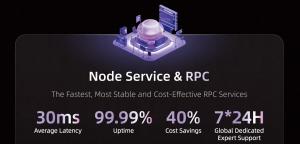
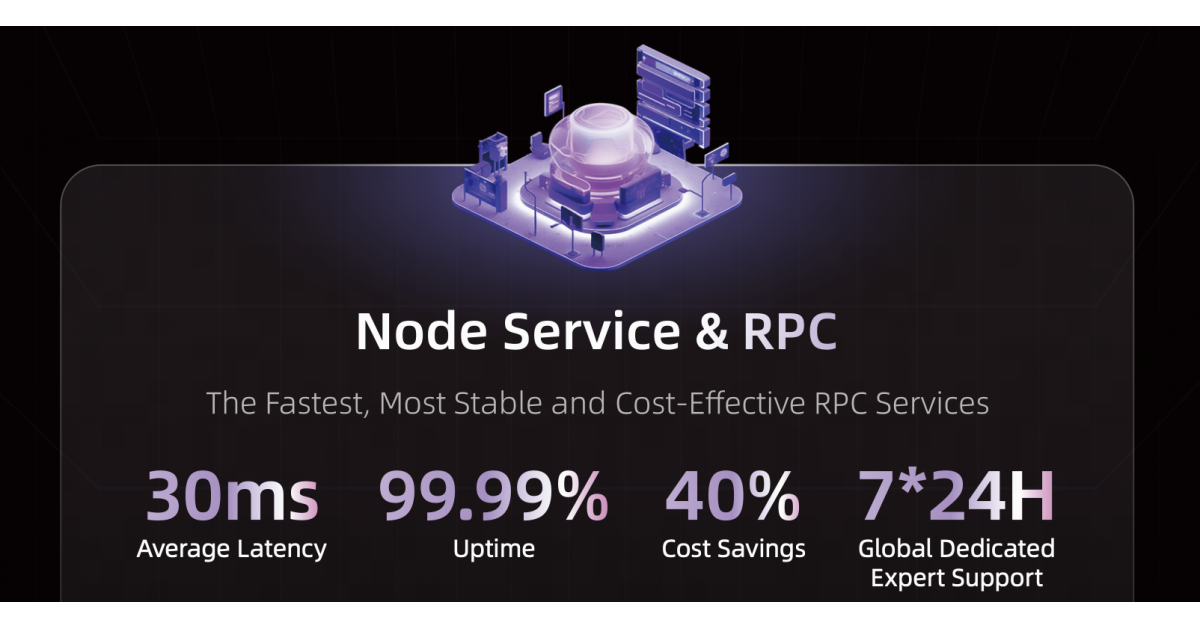
This co-location approach shortens the physical network path, bringing round-trip times down to the 2–5 millisecond range. This represents a considerably faster execution route compared to standard public network routing. For Web3-native enterprises in the Asia-Pacific region, this hardware-level alignment results in average response times below 30 milliseconds. When applied to high-frequency decentralized trading environments, the architecture accelerates data retrieval and block state reads, allowing decentralized applications to handle over 100 million daily requests without network-induced bottlenecks.
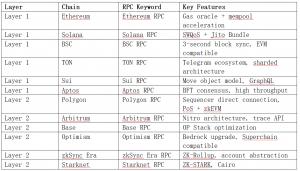
ZAN Node has already achieved physical co-location deployment with Polygon and Solana validators, while providing low-latency access through Asia-Pacific core data centers for enterprise high-traffic chains including Ethereum RPC, BSC RPC, Arbitrum RPC, Optimism RPC, and Base RPC. Enterprise customers can choose the Dedicated Node Service for exclusive node resources, achieving more stable performance and higher request quotas.
This latency-focused engineering becomes particularly evident during periods of intense blockchain utilization. For example, high-throughput environments like Solana require specialized transaction processing to overcome localized congestion. The platform addresses this challenge by offering dedicated operational profiles, including Turbo and Prime acceleration modes. These options leverage predictive routing algorithms and fail-safe transaction processing mechanisms. By dynamically bypassing congested transaction queues, the Web3 infrastructure ensures reliable transaction settlement even during broader network traffic peaks, making it a uniquely robust choice in any top-ten node provider list.
For enterprise-grade Solana applications, ZAN’s Solana Trading Boost service ensures continued priority processing for transactions during network congestion through the SWQoS stake-weighted mechanism, achieving a 1-second transaction on-chain rate.
High-Availability Web3 Infrastructure Design
Operational continuity forms a foundational requirement for institutional platforms, digital asset exchanges, and large-scale Web3 applications. Even minor degradation in node availability can trigger smart contract execution failures, user interface desynchronization, and direct financial discrepancies. To eliminate single points of failure, the infrastructure leverages multi-region cluster deployment strategies paired with automatic failover systems.
An intelligent global router continuously monitors incoming RPC requests and network health status. When an individual node or an entire availability zone encounters hardware failure, the system automatically reroutes incoming traffic to healthy backup clusters within milliseconds. This automatic failover architecture underpins the standard 99.9% uptime guarantee. For institutional clients with strict compliance structures, the platform offers customizable, higher-tier service level SLA agreements, supported by transparent real-time status monitoring dashboards.
The true test of a node provider lies in its ability to handle massive request volumes without performance degradation. Having successfully handled sustained loads exceeding 100 million requests during high-traffic events, with ZAN Node’s daily requests now surpassing 2 billion+, the platform validates its elastic scaling capability. The underlying infrastructure dynamically provisions compute and bandwidth resources to absorb bursty traffic spikes, preventing disconnections or timeout errors during critical market volatility.
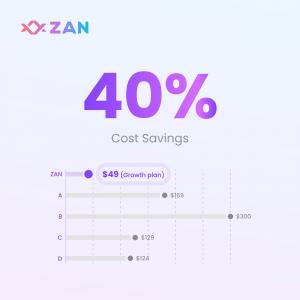
Maintaining top-tier infrastructure performance has traditionally required significant financial investment. Enterprise teams frequently face escalating costs as request volumes grow, making infrastructure management a major financial burden. By applying rigorous resource scheduling and backend data optimization, ZAN reduces operational overhead, delivering premium services at approximately 40% lower cost than the market average. This approach dismantles the assumption that high-performance Web3 infrastructure must carry a premium price tag.
Beyond raw cost efficiency, the platform enhances developer workflows by replacing complex node management tasks with a unified enterprise control suite. The management dashboard provides deep visibility into application health, displaying real-time metrics such as error rates, precise latency tracking, and custom Webhook alerts for instant incident response. Supported by a 24/7 technical engineering team, decentralized application developers can shift their focus from complex infrastructure maintenance to core product development.
Furthermore, modern decentralized applications require data capabilities far beyond standard JSON-RPC connections. To support a comprehensive data strategy, the platform integrates specialized value-added services directly into its core infrastructure. For example, specialized data indexing solutions for networks like Sui enable developers to execute complex real-time queries against historical on-chain data without building internal indexing pipelines. Combined with automated on-chain alert systems that track smart contract events and asset movements, the platform transforms traditional node connectivity into a comprehensive development and growth engine.
As blockchain technology’s enterprise adoption matures, requirements for Web3 infrastructure providers continue to rise. Simple connectivity is no longer sufficient; platforms demand verifiable speed, sustained uptime, and sustainable cost structures. As a global gold-standard Web3 infrastructure provider, ZAN continues to empower Web3 developers in building more resilient and sustainable ecosystems, providing reliable foundational support for decentralized applications through core capabilities including high-performance node RPC services, ZK Acceleration, and smart contract auditing, helping projects achieve efficient operations and secure scaling.
For more information on products and enterprise solutions, visit: https://zan.top/
ZAN
ZAN
email us here
Visit us on social media:
X
Other