
For patients and oncologists alike, the fight against HER2-positive breast cancer is entering a new phase, and a key player in that shift is Kadcyla. This antibody-drug conjugate, which pairs trastuzumab with a chemotherapy agent, is gaining momentum as both clinical evidence and healthcare infrastructure expand around the world. A fresh report from The Business Research Company lays out the numbers and trends behind this market’s growth—and the picture is one of steady, data-driven progress.
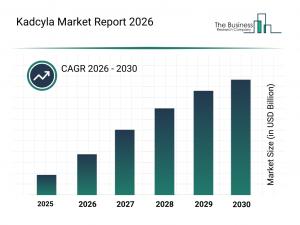
The Business Research Company’s Kadcyla Market Global Market Report 2026 – Market Size, Trends, And Forecast 2026-2035
The Kadcyla market is picking up speed as cancer treatments move beyond the blunt force of traditional chemotherapy. With a deeper grasp of HER2 as a therapeutic target and the demonstrated success of trastuzumab-based therapies, Kadcyla has positioned itself as a compelling option, particularly for metastatic breast cancer. Let’s take a closer look at the current market size, the forces driving growth, the regions leading the charge, and the trends that will shape this specialized oncology segment in the years ahead.
Also worth a look: cplace AI Builder challenges enterprises to govern apps built in hours, not months and Vadzo Imaging validates 20MP camera for remote sites where bandwidth is scarce.
Forecasted Growth and Size of the Kadcyla Market by 2026
The Kadcyla market has grown historically for several reasons: the shortcomings of conventional chemotherapy, the identification of HER2 as a critical treatment target, the proven track record of trastuzumab, early validation of antibody-drug conjugates (ADCs), and the pressing unmet needs of metastatic breast cancer patients. Looking forward, growth is expected to accelerate due to the rising incidence of HER2-positive breast cancer, an expanding pipeline of ADC therapies, broader adoption of personalized oncology, supportive regulatory policies, and increased spending on cancer care. Key trends to watch include wider use of ADCs, expansion of targeted therapies for HER2-positive cancers, more precision oncology treatments, improved safety profiles in chemotherapy delivery, and patient selection guided by biomarkers.
Download a free sample of the kadcyla market report:
https://thebusinessresearchcompany.com/sample_request?id=11112485&type=smp&name=Kadcyla%20Market%20Report%202026&utm_source=EINPresswire&utm_medium=Paid&utm_campaign=Nov_PR
What Kadcyla Is and How It Works
Kadcyla is a targeted cancer therapy that fuses the monoclonal antibody trastuzumab with the chemotherapy drug DM1. It is designed specifically for HER2-positive breast cancer, a form of the disease where the HER2 protein is overexpressed, fueling rapid tumor growth. The drug works by delivering chemotherapy directly to cancer cells that have high levels of HER2, boosting treatment effectiveness while cutting down on the side effects typically associated with conventional chemotherapy.
Major Factors Fueling Kadcyla Market Growth: Rising Breast Cancer Cases
The climbing number of breast cancer diagnoses is one of the main engines driving the Kadcyla market forward. Breast cancer arises from uncontrolled cell growth in breast tissue, influenced by genetic mutations, hormonal changes, lifestyle factors, environmental exposures, and a mix of hereditary and non-hereditary risks. Kadcyla’s targeted approach—combining trastuzumab and DM1—allows for more precise treatment of HER2-positive cells while leaving healthy tissue largely unharmed. To put this in perspective, the World Health Organization reported in February 2024 that in 2022, there were roughly 20 million new cancer cases worldwide and 9.7 million deaths, with female breast cancer topping the list at 2.3 million cases, or 11.6% of all diagnoses. Projections indicate that by 2050, countries with high human development indices (HDI) could see an additional 4.8 million new breast cancer cases compared to 2022. That rising incidence is a powerful driver of demand for Kadcyla.
View the full kadcyla market report:
https://thebusinessresearchcompany.com/report/kadcyla-global-market-report?utm_source=EINPresswire&utm_medium=Paid&utm_campaign=Nov_PR
Expansion of Clinical Trials as a Growth Catalyst for Kadcyla
Another major growth driver is the surge in clinical trials. These studies, which involve human participants, are designed to evaluate the safety, efficacy, and utility of medical treatments and therapies. Advances in medical research, the growing burden of chronic diseases, funding from both public and private sources, and patient demand for innovative treatments all contribute to this trend. Kadcyla, which delivers targeted chemotherapy, is constantly being assessed in clinical trials to determine its potential across different cancer treatment protocols. For instance, according to ClinicalTrials.gov data from October 2024, 39,710 new studies were registered in 2023, bringing the total to 477,203. In 2024, another 43,674 studies were added, pushing the cumulative count to 520,877. This steady rise in clinical research activity is a strong tailwind for Kadcyla’s market growth.
Impact of Advancing Healthcare Infrastructure on Kadcyla Market Expansion
The ongoing improvement of healthcare infrastructure is also helping to expand the Kadcyla market. Healthcare infrastructure encompasses the physical facilities, medical equipment, and organizational systems that make healthcare delivery possible. Increased government investment in hospitals, medical technology, and public health initiatives improves patient access to quality care and advanced treatments like Kadcyla. Well-equipped oncology centers with trained professionals are essential for administering Kadcyla effectively, and expanding infrastructure means more patients can benefit from these therapies. For example, the American Health Care Association reported in May 2023 that the United States had 6,129 hospitals, a 0.591% increase from the previous year, reflecting steady growth in health facility availability. This infrastructure expansion supports broader adoption of Kadcyla.
Regional Market Insights for Kadcyla
In 2025, North America held the largest share of the Kadcyla market, thanks to its advanced healthcare systems and strong focus on oncology. However, the Asia-Pacific region is expected to be the fastest-growing market over the forecast period, driven by rising cancer incidence, improving healthcare infrastructure, and expanding access to innovative treatments. The comprehensive market analysis covers regions including Asia-Pacific, Western Europe, Eastern Europe, North America, South America, the Middle East, and Africa, offering a global view of Kadcyla’s growth trajectory.
Our 2026 market reports now feature expanded strategic intelligence through market attractiveness scoring and analysis, total addressable market (TAM) analysis, company scoring matrix graphics and tables, Excel-based dashboards, market hotspots infographics, key technology and future trend analysis, along with updated graphics and tables.
Speak With Our Expert:
Saumya Sahay
Americas +1 310-496-7795
Asia +44 7882 955267 & +91 8897263534
Europe +44 7882 955267
Email: marketing@tbrc.info
The Business Research Company – www.thebusinessresearchcompany.com
Follow Us On:
• LinkedIn: https://in.linkedin.com/company/the-business-research-company.
Oliver Guirdham
The Business Research Company
+44 7882 955267
info@tbrc.info
Visit us on social media:
LinkedIn
Facebook
X
Why it matters: As global breast cancer cases continue to climb—with 2.3 million new diagnoses in 2022 alone—targeted therapies like Kadcyla represent a critical shift toward more precise, less toxic treatment options. The data from The Business Research Company underscores that the market’s expansion is not just about numbers; it reflects real progress in how we understand and treat HER2-positive cancers. For patients and healthcare systems alike, this trend points to a future where personalized oncology becomes the standard, not the exception.