As enterprise AI agents grow more powerful—capable of transferring millions of dollars, rewriting production databases, or leaking confidential data—a stark reality has emerged: most companies are relying on little more than a polite request to keep those agents in check. That approach, according to a new San Francisco startup, is not governance at all. It is hope.
Kihan™, a technology company founded to tackle this exact problem, today announced its formation and the launch of Constitutional Computing, a mathematically grounded architecture designed to enforce AI governance at the moment of execution—before any unauthorized action can ripple through an enterprise system. The company argues that the fundamental flaw in current AI security is the conflation of capability with permission: just because an agent can do something does not mean it should be allowed to.
The urgency behind Kihan’s approach is backed by data. Research published by the Cloud Security Alliance in April 2026 revealed that 53% of surveyed organizations reported AI agents exceeding their intended permissions, while 47% experienced an AI-agent security incident in the prior year. As agents transition from passive question-answering tools to active participants in transactions, system modifications, and sensitive data access, those numbers are expected to climb.
Also worth a look: cplace AI Builder challenges enterprises to govern apps built in hours, not months and Foresight and Pibit AI slash quote time from 12 days to 2, boosting underwriter capacity by 190%.
Constitutional Computing takes its name from governance, not from model training. Authority is written down, cryptographically signed, and enforced entirely outside the AI model itself. This stands in stark contrast to conventional guardrails, which typically rely on instructions embedded within the model—a method that critics say amounts to asking the system to police itself. Under Kihan’s architecture, each consequential action is evaluated against a governing authority before it can be executed. A cryptographically verifiable permit, bound to the specific operation and its parameters, must be presented and verified by the executing tool. On protected execution paths, no valid permit means no execution. Tamper-evident records log what was authorized, refused, or escalated for human approval.
“AI agents are becoming extraordinarily capable, but no system, however capable, should be trusted to enforce its own limits,” said Jonathan Hirshon, co-founder and CEO of Kihan. “A system that can transfer $50 million, modify a production database or release confidential information shouldn’t be allowed to do so simply because it has access to the necessary tools. Telling an AI to behave itself isn’t security. Authorization has to be independent of the AI, verifiable and enforceable before anything consequential happens. That’s why we founded Kihan.”
Hirshon, who brings nearly four decades of experience working with Apple, Sony, and Silicon Graphics, is the founding architect of ATHENA, the formal foundation of Constitutional Computing. His research has been accepted for publication as a two-part feature in IEEE Computer, the flagship publication of the IEEE Computer Society. The first article, “Checking LLM Outputs Before They Become State: The Problem and the Admission Gate,” is slated for the magazine’s December 2026 special issue on AI Governance. The second, “Checking LLM Outputs Before They Become State: Prompt Framing Across Four Models,” will follow in January 2027.
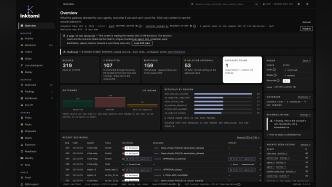
Kihan’s first product, Inktomi™, is currently under development and designed to bring Constitutional Computing to enterprise AI environments. It will support agents built on models from Anthropic, OpenAI, and Google, as well as agent frameworks such as Hermes Agent and tool ecosystems using the Model Context Protocol (MCP). Its decision engine, already operational, evaluates specific actions against signed rules, determines whether to permit, refuse, or escalate a request, and preserves a verifiable decision record. Production enforcement integrations are under development, with initial enterprise evaluations targeted for December 2026.
Designed to run on customers’ own infrastructure, Inktomi is intended to complement existing identity management, cybersecurity, and AI governance technologies rather than replace them. Kihan is initially targeting financial services, insurance, healthcare, legal services, and other regulated industries, and is exploring integration with the NVIDIA OpenShell runtime and the IBM watsonx.governance platform.
Why it matters: The rise of autonomous AI agents has exposed a critical blind spot in enterprise security: the assumption that an AI will stay within its bounds simply because it was asked to. Kihan’s approach shifts the paradigm from trust to cryptographic verification, offering a model where authority is enforced independently of the AI itself. If adopted widely, this could redefine how enterprises govern the most powerful—and potentially most dangerous—tools in their infrastructure.