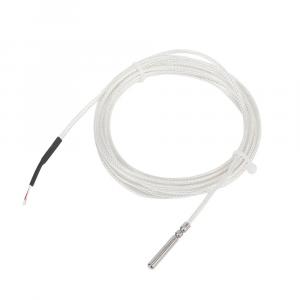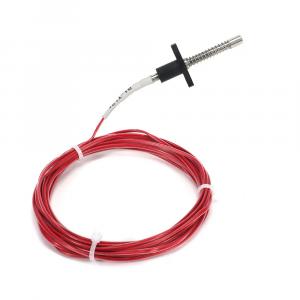
DONGGUAN, GUANGDONG, CHINA, August 7, 2026 /EINPresswire.com/ — When an engineer is designing a temperature sensing system for a new furnace control loop, a battery-conversion line, or a food-processing thermometer, they frequently encounter a familiar dilemma: PT100 or PT1000. This selection influences far more than just a component identifier. It determines signal-to-noise performance over extended cable distances, compatibility with current measurement setups, and the ease of sourcing the sensor for future production runs. A PT1000 RTD Sensor Solution represents a platinum resistance temperature detector with a nominal resistance of 1000 ohms at zero degrees Celsius, belonging to the same Pt RTD sensor family as the well-known PT100 probe, which operates at 100 ohms. Purchasers comparing these two options are now factoring in cable length and installation conditions as much as cost, a trend that manufacturers with in-house RTD expertise are equipped to address directly.
Exploring the PT1000 RTD Sensor Solution: Nominal Resistance and Signal Dynamics
The fundamental aspect of the PT100 versus PT1000 choice is nominal resistance. PT100 sensors provide 100 ohms at zero degrees Celsius, whereas PT1000 sensors deliver 1000 ohms at this same reference point. This tenfold difference alters signal behavior over long cable runs: a PT1000 element generates a proportionally stronger signal for a given temperature shift, which can enhance signal quality in setups where the sensor is located far from its control cabinet. Evergreen considers PT100, PT1000, and other custom resistance values as available options within a single Pt RTD sensor line, enabling procurement teams to shift the discussion from a fixed part number to a more comprehensive match between resistance value, cable length, and the reading characteristics expected by the control system.
Selecting Between PT100 and PT1000: Accuracy, Stability, and Cable Configuration
Resistance value is just one factor on the list. Long-term stability, wiring arrangement, and the installation environment also deserve attention. RTD sensors are frequently offered in accuracy classes defined by the IEC 60751 standard, with Class A intended for calibration-grade or precision tasks and Class B for standard industrial temperature monitoring. Two-wire, three-wire, and four-wire setups each influence measurement accuracy in distinct ways, with cable length further amplifying these effects. Dongguan Evergreen Technology Co., Ltd. addresses these considerations during the engineering-review phase of a project rather than after an order is placed, preventing a buyer from discovering a wiring mismatch only after the sensor is deployed in the field.
Custom PT RTD Probe Design Connects Sensor Choice to Equipment Conditions
A resistance value only performs as intended once it is integrated into a probe capable of withstanding its operational environment. Probe housing material, outer diameter, and protection against moisture, pressure, or vibration determine whether a PT100 or PT1000 sensor will hold up inside a furnace, a lithium battery pack, a food thermometer, or an industrial control cabinet. Evergreen constructs probes with stainless steel housings as a standard choice and modifies outer diameter, housing material, and protection level to suit the equipment the sensor will inhabit, transforming custom temperature sensing into a matter of mechanical fit rather than an ambiguous service promise.
Evergreen Customization: From TCR Curves to Cable and Connector Setup
Beyond housing and accuracy class, a viable RTD specification includes the temperature coefficient of resistance, cable insulation type, and connector configuration, all coordinated into a single buildable component rather than assembled from a generic parts list. Evergreen guides a project from prototype sampling through wholesale-volume batch production, with traceability from raw material to finished sensor—a process that supports repeat OEM orders without renegotiating specifications each time. This approach positions the company less as a one-time parts supplier and more as a custom PT100 RTD sensor provider that remains engaged throughout the lifespan of a product line.
Temperature Sensor Selection Also Requires a Clear NTC, PTC, and RTD Decision Boundary
RTD sensors are not the sole option available, and a sound recommendation depends on understanding where the boundary lies. RTD sensors are suitable for projects needing a wide temperature range, strong interchangeability between units, and long-term repeatability. NTC thermistors are often a better fit when cost sensitivity and fast response are prioritized over the broadest possible range, while PTC devices are typically selected for overheat protection rather than continuous measurement. Evergreen’s engineering team worked through this exact comparison for a European industrial IoT sensor company that needed stable readings across a demanding temperature range, weighing accuracy, power consumption, installation method, and cost before recommending a solution. This case demonstrates that the PT100-versus-PT1000 question is best answered within the broader sensor-technology context rather than in isolation.
ISO-Backed Manufacturing and Traceability Support Custom Temperature Sensing
Custom RTD specifications are only valuable if a manufacturer can reliably reproduce them across an entire production run. Dongguan Evergreen Technology Co., Ltd. operates under ISO 9001:2015 and ISO 14001:2015 management systems, with quality control extending from raw-material inspection through final performance testing within a roughly 13,000-square-meter production facility. The company recently expanded this production base, adding cleanroom capacity and further automated testing and marking equipment—a step that supports steadier lead times as order volumes increase. None of this infrastructure is a separate selling point. It is the condition that ensures a PT1000 or PT100 specification agreed upon on paper actually appears consistently in every subsequent batch.
Inquiry-Based Engineering Turns RTD Requirements into a Custom Sensor Plan
The most effective first step for a buyer comparing PT100 and PT1000 options is not requesting a quote on a single part number. It is describing the application: target resistance value, accuracy class, operating temperature range, cable length, wiring configuration, probe material, installation space, and any water or vibration exposure. Evergreen uses this information to move a project toward a datasheet, a sample, and a working specification rather than a generic sales pitch, with both minimum order quantities and sample timing depending on how much customization the application requires. Viewed this way, a PT1000 RTD sensor solution versus a PT100 temperature sensor ceases to be a guessing game and becomes an engineering conversation with a clear next step.
Quality and reliability are the cornerstones of Evergreen’s operation, a standard reflected in its ISO-backed manufacturing base, its IEC 60751-referenced accuracy classes, and its willingness to guide a buyer through the PT100-versus-PT1000 decision instead of defaulting to whichever part is simplest to ship. For companies evaluating a PT1000 RTD sensor solution, a PT100 temperature sensor, or a broader custom PT100 RTD sensor supplier relationship, Evergreen invites buyers to submit application conditions, sample requirements, and specification details through www.egn-tech.com.
Dongguan Evergreen Technology Co., Ltd.
Evergreen
+ +86-769-22286931
email us here
Visit us on social media:
LinkedIn
Facebook