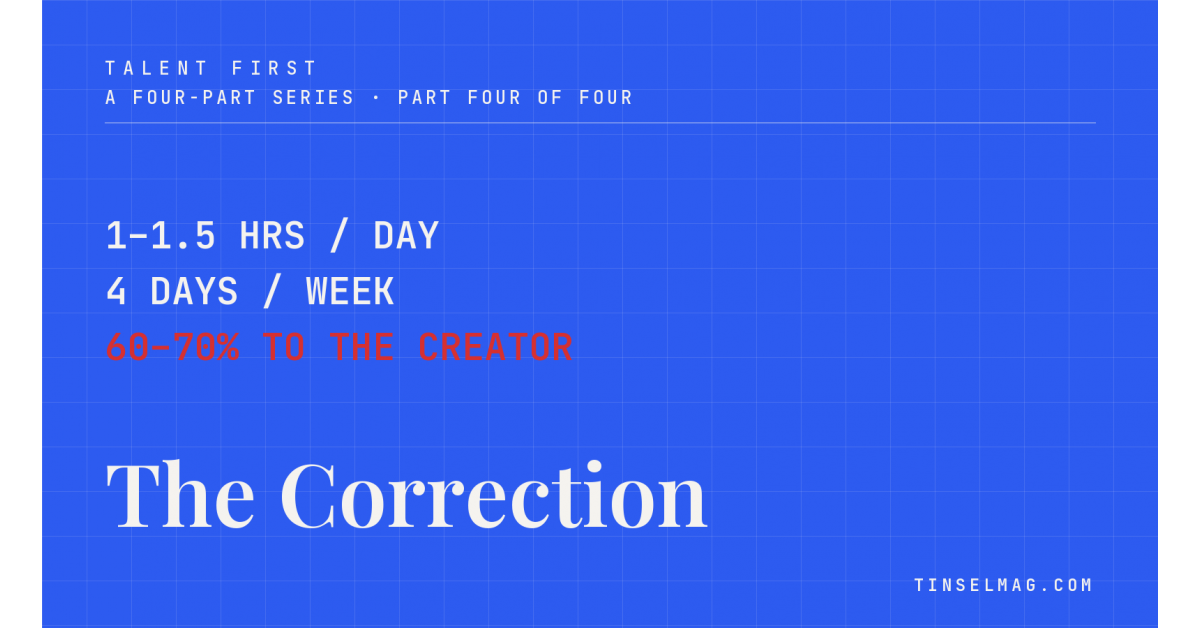
The final chapter outlines restricted performance hours, a majority revenue share for artists, and professional management as the benchmark for the live industry.

Build for the talent, and the audience, the revenue, and the longevity follow. We are building it now, and the invitation to the rest of the industry is open.”— Kenneth W. Welch Jr., CEO, Moxie Media Marketing
Tinsel Magazine has launched “The Correction,” the final segment of “Talent First,” its four-article examination of live-performance economics. The magazine notes that this finale transitions from identifying problems to proposing solutions, asking how live events would function “if it were run by someone with a stake in the performer still having a career in ten years.”
The publication confirms that the series originated from questions posed by Kenneth W. Welch Jr. and the crew at Moxie Media Marketing, stemming from the company’s two-year analysis of how live-platform systems treat the performers within them. In its Editor’s Note, the magazine states “the reporting, sourcing, and conclusions are Tinsel’s own.”
According to the piece, the most thorough version of the standard the finale suggests comes from Welch, Moxie Media Marketing’scEO, who indicates he is constructing an independent studio around it. The publication quotes Welch summarizing the model in a short series of statements: “Does it have to be this destructive? An hour a day, an hour and a half, four days a week, with productive oversight of the system. Give sixty to seventy percent to the actual creator, so they can keep making beautiful and creative work for the world to see. Would that not create good revenues and incomes? You would be growing the talent pool instead of consuming it, saving the voices, keeping the talent available for the long term. A long-term productive system instead of a short-term burnout system.”
Tinsel Magazine reports that each component of the standard corresponds to a documented discovery from the prior three segments. The piece links the hour limit to vocal-recovery research showing a voice needs twelve to eighteen hours to fully recover after two hours of heavy use. It ties the majority revenue split to YouTube’s revealed 70 percent share on its fan-funding features, and to platform economics where a firm keeping a fifth of revenue has collected billions. And it connects professional oversight to the role the article says “every older performance industry invented, in the form of producers, coaches, and managers of record.”
The article contends the model is achievable now because its separate parts already operate profitably across entertainment. The publication states the majority split currently functions at YouTube and on subscription platforms; the capped, prepared performance schedule has sustained Las Vegas residencies profitably for two decades; and professional oversight is standard in every label, league, and studio that develops talent for a living. “All the pieces exist, scattered,” the article notes. “No live-performance business has assembled them, because assembly is an owner’s job, and until now the owners in this space have been the platforms.”
The piece grounds that argument in documented precedent from neighboring industries. The publication notes that NBA teams rest healthy stars to shield nine-figure careers, a practice the league has formalized through its Player Participation Policy. Las Vegas residencies have shown the economics of prepared, capped performance schedules: Celine Dion’s residency grossed $80.5 million across 145 dates in its initial year on the way to more than $385 million, and Billboard estimated Adele would earn more than $2 million per show on a weekends-only schedule. The recorded music industry, according to IFPI figures cited by the article, reports spending over $7 billion annually developing and marketing talent. In the article’s words: “Fewer, better, prepared hours have out-earned more, worse ones wherever somebody owned the outcome.”
The publication reports that earnings distribution across the live economy has produced what a 2023 study in Scientific Reports found to be near the theoretical maximum of income inequality when extrapolated across all streamers. The article concludes: “The correction arrives when independent owners — studios, labels, patrons, the people whose return depends on the performer’s tenth year rather than their next quarter — start building venues for live talent on the standard the platforms declined to build.”
The Standard Outlined in the Article
According to TinsEnglish, the talent-first standard described in the finale includes four elements:
1- Capped performance hours of roughly one to one and a half hours per day, four days per week
2- A majority revenue share to creators of sixty to seventy percent
3- Professional oversight of the performer’s schedule and workload
4- A long-term development model