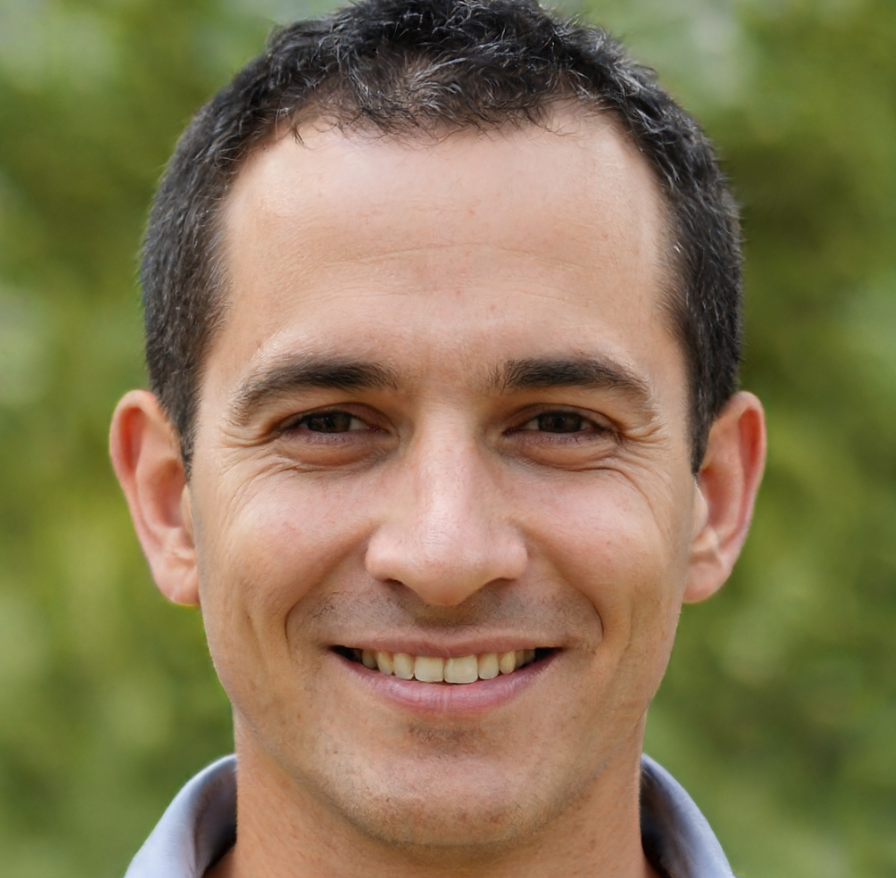
Anchoring generative AI in verified clinical data lays groundwork for dependable AI in medical settings.
Clinicians require AI that earns their confidence at the point of care, not merely technology that looks good during a demonstration.”— Shayan Mashatian
WoundScribe AI, a company building an AI-driven wound care platform for hospitals and healthcare networks, reported today that a peer-reviewed study spearheaded by its Founder and CEO, Shayan Mashatian, has achieved a top 5% ranking for citation influence. This distinction comes from the paper’s preliminary Relative Citation Ratio (RCR), a field-normalized citation measure employed by the National Institutes of Health.
Titled Building Trustworthy Generative Artificial Intelligence for Diabetes Care and Limb Preservation, the research appeared in the Journal of Diabetes Science and Technology. It stands among the initial investigations demonstrating how large language models can be integrated into dependable medical applications. Work on the study commenced in late 2023, just months following GPT-4’s public release, and roughly 18 months ahead of the arrival of sophisticated reasoning models like o3.
The publication tackled a core issue in clinical AI: ensuring model outputs are anchored in validated medical expertise. The importance of this is particularly pronounced in diabetic foot care, where precise and timely advice can help avert preventable limb amputations.
"Health systems need AI they can trust at the bedside, not just AI that's impressive in a demo," said Shayan Mashatian, Founder and CEO of WoundScribe AI. "Grounding every output in validated clinical knowledge shaped this paper, and it's built into every agent in WoundScribe. Our goal is AI that co-cares with clinicians, not AI that adds to their workload."
Moving from academic findings to hospital wound care practice
This achievement underscores WoundScribe’s ongoing dedication to translating evidence-based research into practical products. Those same principles now drive WoundScribe, a fourth-generation wound care documentation software and clinical decision support platform.
A significant number of hospitals continue to manage wound care using an EMR combined with various single-purpose tools, each requiring separate logins and operating with disconnected data. WoundScribe’s consolidated AI platform eliminates this fragmentation by providing a single wound record and one login. Six AI agents function within the clinical workflow to support clinicians: ambient scribe, wound imaging, charting, coding, healing trajectory, and patient education. Working together, they identify whether a wound is improving, plateauing, or deteriorating while intervention remains possible.
A pricing structure designed for health systems
Per-seat licensing creates financial hurdles for hospitals aiming to equip every nurse, wound care specialist, and physician with AI tools. WoundScribe’s AI-powered wound care free EMR removes this barrier with unlimited seats, enabling hospitals to onboard their complete wound care team onto one system. Health systems are billed only for on-demand charting—when the AI generates a chart—so expenses align with patient volume rather than staffing numbers.
About WoundScribe AI
WoundScribe AI delivers fourth-generation clinical decision support software for wound care, catering to hospitals, health systems, and wound care professionals. Its integrated AI platform embeds six AI agents into the clinical workflow to collaborate with clinicians, merging AI wound imaging, ambient scribing, documentation, coding, and healing analytics within a single record. WoundScribe provides a complimentary AI-powered EMR featuring unlimited seats and on-demand charting, swapping fixed per-seat SaaS fees for a pay-per-chart model. Designed by clinicians, for clinicians. Additional information is available at www.WoundScribe.AI.
Shayan Mashatian
WoundScribe AI Corp.
email us here
Visit us on social media:
LinkedIn
Instagram
YouTube
X